
Li-ion Cylindrical vs. Li-Polymer Battery: A Technical and Supplier Comparison for Industrial Procurement
For industrial procurement professionals, selecting the right battery technology and the optimal supplier is a critical decision impacting product performance, cost, and time-to-market. With diverse applications from Industrial Usage Battery packs to Medical Device Battery and IoT Device Battery solutions, understanding the core differences between mainstream technologies like Li-ion Cylindrical Battery and Li-Polymer Battery is essential. This article provides a data-driven comparison and a strategic framework to guide your decision between these battery types and between different supplier origins.
1. Product Comparison: Li-ion Cylindrical vs. Li-Polymer Battery
We analyze two prevalent Customized Li-ion Battery form factors across four key procurement dimensions.
| Comparison Dimension | Li-ion Cylindrical Battery (e.g., INR18650, INR21700) | Li-Polymer Battery (Pouch Cell) |
|---|---|---|
| Technical Parameters | High energy density (Wh/kg), mature & standardized manufacturing. Excellent cycle life (500-1500+ cycles). Robust mechanical structure. Typically lower internal resistance, suitable for high discharge rates. | Very high energy density (Wh/L), flexible, lightweight design. Can be made very thin. Good cycle life (300-800+ cycles). Slightly higher internal resistance in standard designs. |
| Applicable Scenarios | Ideal for applications requiring high energy density, standardized packs, and robust mechanical support: Analyzer tools, power banks, Robot & E-Mobility modules, and some Industrial Usage Battery systems. | Perfect for space-constrained, lightweight, or uniquely shaped devices: slim Consumer Electronics Battery, wearable Medical Device Battery, compact IoT Device Battery, and custom-shaped products. |
| Cost Analysis | Generally lower cost per Wh due to mass production, automated assembly, and mature supply chains. Economies of scale are significant. | Typically higher cost per Wh. Custom tooling for pouch cells and more complex Battery Assembling Factory processes contribute to the price premium. |
| Maintenance & Integration Difficulty | Easier to assemble into standardized packs (like INR18650-4S2P). Requires robust battery management systems (BMS) for multi-cell configurations. Well-understood safety protocols. | Requires careful mechanical protection (pouch is fragile). Assembly into packs can be more complex, often needing custom fixtures. BMS design is critical due to swelling potential. |

Hypercell's INR18650S Cylindrical Battery: A high-performance, wide-temperature option for demanding industrial applications.
2. Supplier Comparison: Chinese Source Factory vs. International Brand
The choice between a Chinese manufacturer like Hypercell and a traditional international brand involves trade-offs.
Chinese Source Factory (e.g., Shenzhen Hypercell Co., LTD)
- Price Advantage: Significant cost savings (typically 20-40%) due to integrated supply chains, vertical manufacturing, and lower operational costs.
- Customization Capability: High flexibility for Customized Li-ion Battery solutions, including special shapes (like HPL432733), capacities, and performance parameters (high-rate, wide temperature).
- Lead Time: Generally shorter production cycles (e.g., 4-8 weeks for custom projects) due to localized supply chain and efficient Battery Assembling Factory operations.
- After-Sales & Service Network: Growing global support. May rely on regional distributors or direct technical support from HQ. Companies like Hypercell provide direct engineering support.
International Brand Supplier
- Price: Premium pricing reflecting brand value, extensive R&D overhead, and global marketing.
- Customization Capability: Often limited to standard product lines or require very high minimum order quantities (MOQs) for custom designs.
- Lead Time: Can be longer (e.g., 12-20+ weeks) due to centralized manufacturing and complex global logistics.
- After-Sales & Service Network: Extensive, established global service centers and local technical support in many regions.
Established Chinese leaders like Hypercell bridge this gap by combining the advantages of a source factory with international standards. With 18 years of experience, a strong R&D team, and certifications including ISO 9001:2015, ISO 14001:2015, RoHS, and UN38.3 transport certifications, they offer a compelling value proposition.
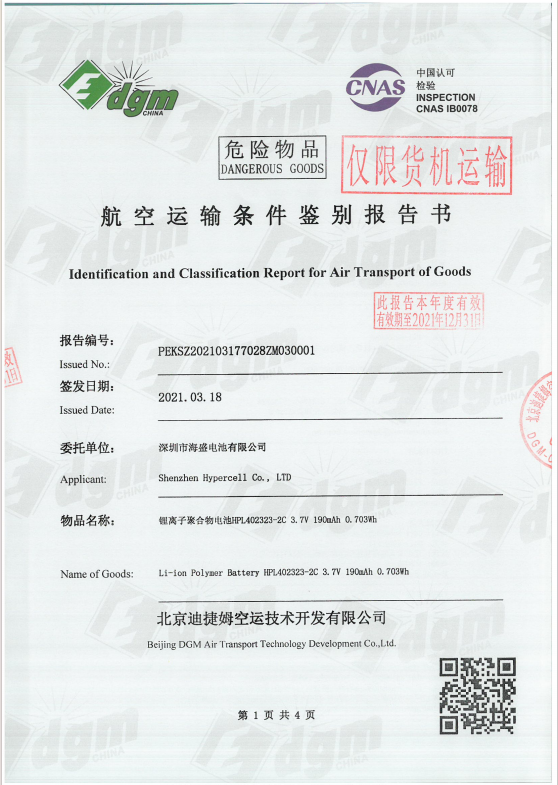
Certifications like UN38.3 for air transport are critical for global logistics and are standard for reputable suppliers like Hypercell.
3. Decision Model: A 3-Step Framework for Selecting Battery Solutions
- Step 1: Define the Application Scenario Precisely. Is it a high-vibration industrial tool (LiFePO4 Battery or cylindrical may be better), a slim medical monitor (polymer ideal), or a high-power mobility device (cylindrical high-rate cells)? List environmental factors (temperature, humidity), size constraints, and lifecycle requirements.
- Step 2: Match Technical Parameters to the Scenario. Based on Step 1, create a specification sheet: required voltage, capacity (Ah), discharge rate (C-rate), cycle life, dimensions, and weight. This will naturally filter the suitable battery chemistry (Li-ion, LiFePO4) and form factor (cylindrical, polymer).
-
Step 3: Calculate the Total Cost of Ownership (TCO).
Move beyond unit price. Factor in:
- Battery pack integration costs (easier assembly for cylindrical?).
- Expected lifespan and replacement frequency.
- Logistics, duties, and potential downtime costs.
- Supplier value-add: Does the Battery Assembling Factory offer design support, BMS integration, or testing services that reduce your internal costs?
4. Case Study: Selecting a Chinese Partner for a Custom IoT Solution
A European developer of a compact environmental Analyzer needed a thin, high-capacity IoT Device Battery with a 5-year operational life. The space constraint ruled out cylindrical cells. While an international brand offered a standard pouch cell, it required a bulky casing, reducing capacity.
They evaluated Shenzhen Hypercell Co., LTD. Hypercell's engineering team proposed a custom Li-Polymer Battery solution (HPL416682 series) that fit the device's exact internal contours, maximizing capacity by 25%. The strong R&D team optimized the cell chemistry for low self-discharge, critical for the IoT application.
- Customized Design: Hypercell provided a turnkey solution from cell design to a protected battery pack with an integrated PCM.
- Cost Efficiency: The total project cost was 35% lower than the modified standard solution from the international brand.
- Rapid Delivery: From design freeze to first sample delivery was 5 weeks, and mass production commenced 3 weeks later, accelerating the client's product launch.
This case highlights how a technically proficient Chinese Battery Assembling Factory like Hypercell, with its strict quality control and vertical capabilities, can deliver superior value for specialized applications.
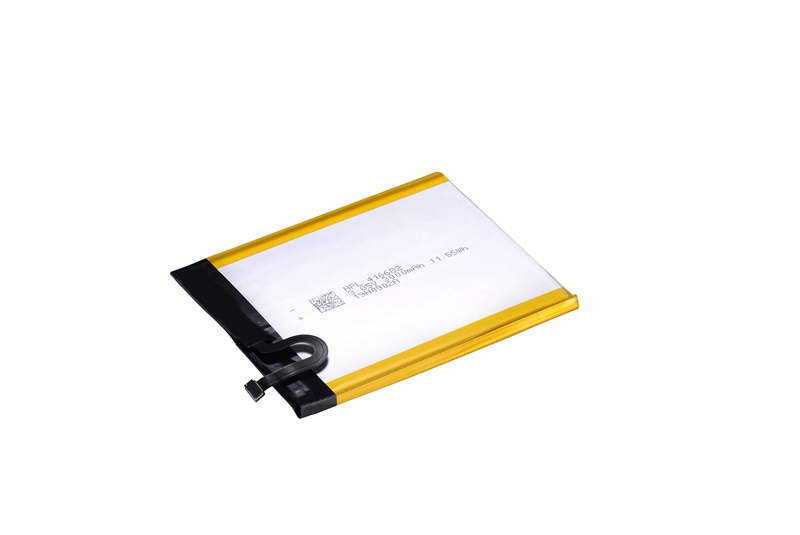
Custom Li-Polymer batteries like the HPL416682 model enable innovative form factors for IoT and medical devices.
About Shenzhen Hypercell Co., Ltd.
Established in 2007, Hypercell is a leading high-quality Battery Assembling Factory headquartered in Shenzhen with production facilities in Dongguan. With over 1,200 staff and a daily output of 30MWh, Hypercell specializes in providing safe, environmentally friendly, and Customized Li-ion Battery solutions, including Li-ion Cylindrical Battery, Li-Polymer Battery, and LiFePO4 Battery for global clients in industrial, medical, IoT, and consumer electronics sectors.
Contact Hypercell for your customized battery project:
Tel: +86 755 2376 4134
Email: info@hypercellbattery.com
Website: www.hypercellbattery.com
Address: Room 2706-2707, Baoshan Shidai Building, Minqiang Community, Longhua District, Shenzhen 518131 Guangdong, China.
Have Questions or Need More Details?
Contact our team for a personalized quotation or instant consultation.
Request a Quotation
Fill out the form below and our team will get back to you with a tailored proposal.
WhatsApp Direct Chat
Prefer to chat in real-time? Message us on WhatsApp for instant assistance & quick answers.
- Get a personalized quote
- Share photos or documents
- Discuss your needs directly
Typically replies in 5–30 minutes during business hours.