
How to Choose the Right Battery Assembling Factory for Your Custom Li-ion Battery Project
A Comprehensive Guide to Selecting Your Ideal Battery Manufacturing Partner
February 14, 2026 — The global demand for specialized power solutions is surging, driven by innovations in IoT devices, medical equipment, and industrial automation. For engineers, product managers, and procurement specialists, finding a reliable Battery Assembling Factory is a critical step that can determine the success, safety, and market viability of your product. This guide will walk you through the key factors to consider when selecting a manufacturing partner for your Customized Li-ion Battery needs, with insights into industry standards and the capabilities of leading manufacturers like Hypercell.
1. Define Your Application and Technical Requirements
The first step is a clear understanding of your project's needs. Different applications demand different battery chemistries and form factors.
- Industrial Usage Battery: Requires robustness, long cycle life, and often operation in wide temperature ranges. Think of batteries for Analyzer equipment or heavy-duty sensors.
- Medical Device Battery: Non-negotiable safety, high reliability, and compliance with stringent medical standards are paramount. These batteries often need specific certifications.
- Consumer Electronics Battery: Focuses on sleek design (thin Li-Polymer Battery), high energy density, and fast charging capabilities.
- Robot & E-Mobility: Demands high discharge rates, durability, and often uses robust LiFePO4 Battery or high-power Li-ion Cylindrical Battery packs.
- IoT Device Battery: Prioritizes long shelf life, low self-discharge, and sometimes ultra-compact or custom shapes to fit constrained spaces.
Clearly documenting voltage, capacity (mAh/Ah), dimensions, discharge rate (C-rate), operating temperature, and required lifecycle will streamline communication with potential factories.
2. Evaluate Core Manufacturing Capabilities and Technology
A top-tier Battery Assembling Factory should demonstrate proficiency across multiple battery types. Look for evidence of their work in:

High-power battery pack for demanding applications, showcasing advanced assembly.
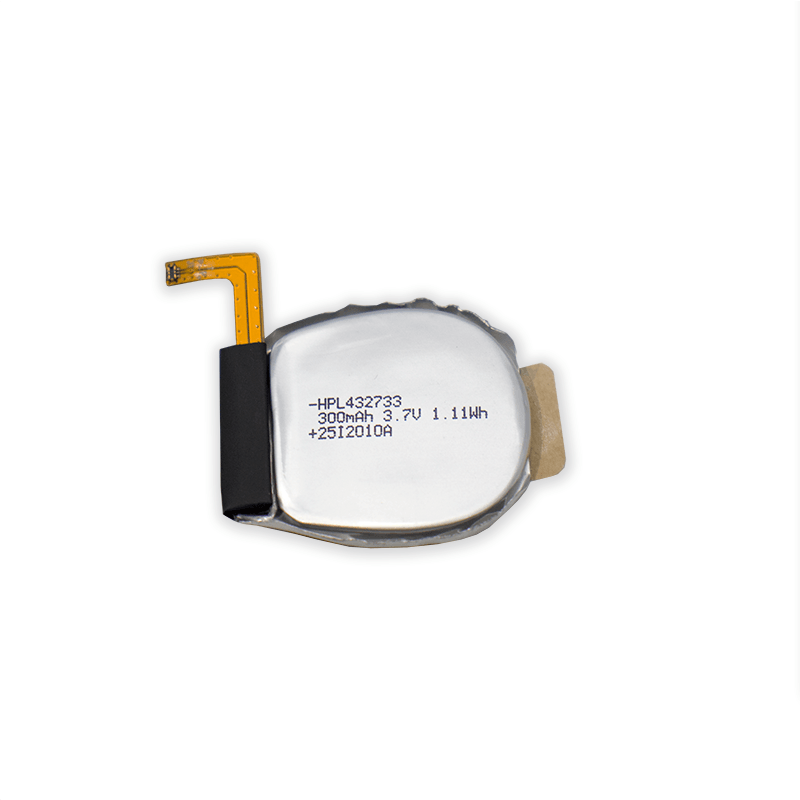
A compact Li-Polymer Battery ideal for space-constrained IoT or medical devices.
For instance, Hypercell, with its 18 years of experience, operates multiple factories in Guangdong with a daily output of 30MWh. Their portfolio spans Li-ion Cylindrical Battery packs (like the INR18650 series), prismatic Li-Polymer Battery cells, and safer LiFePO4 Battery solutions. This versatility is a strong indicator of a factory's ability to handle diverse Customized Li-ion Battery projects.
3. Scrutinize the R&D and Customization Process
Off-the-shelf solutions rarely fit innovative products. A factory's R&D strength is crucial for customization. Inquire about:
- R&D Team Composition: A team with doctors, masters, and senior engineers, like the one at Hypercell, can tackle complex material science and circuit design challenges.
- Prototyping Speed: How quickly can they turn your specifications into a working prototype?
- Specialization: Can they develop batteries for extreme conditions (high/low temperature, high rate discharge) or create special shapes? Hypercell's focus on new technologies like solid-state and sodium-ion batteries also shows forward-thinking R&D.
4. Verify Quality Management and Certifications
This is non-negotiable, especially for Medical Device Battery or Industrial Usage Battery projects. Request and verify certifications.
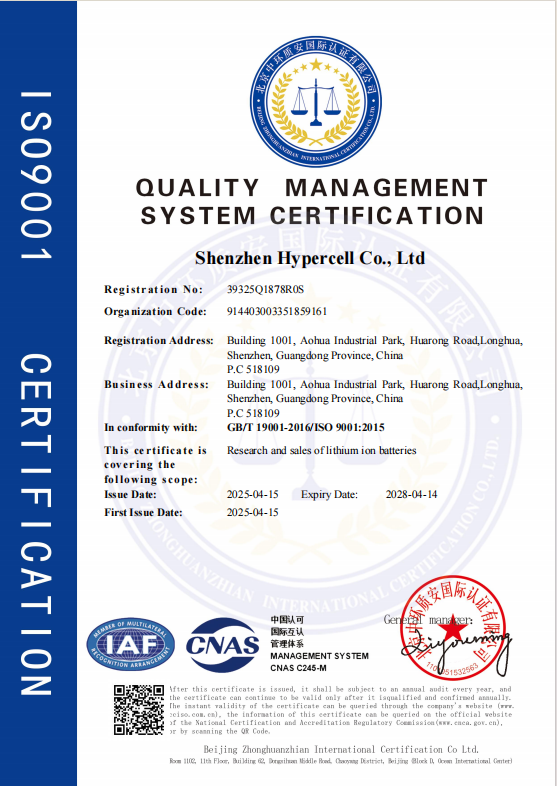
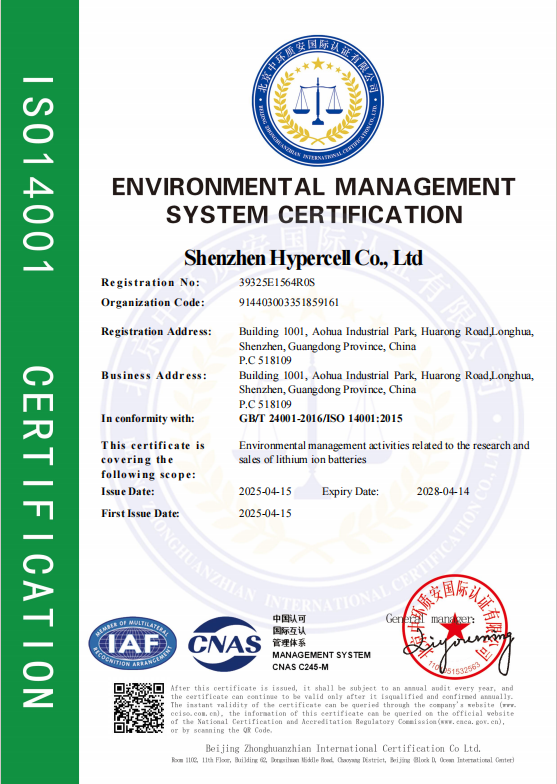
A credible Battery Assembling Factory will be transparent about its certifications. Hypercell, for example, is a qualified ISO9001:2015 and ISO14001:2015 enterprise. These certificates validate their quality and environmental management systems. Additionally, certifications like RoHS (Restriction of Hazardous Substances), CB (for international safety), and UN transport reports (for safe air/sea shipping of lithium batteries) are critical for global market access.

5. Assess Production Scale, Supply Chain, and Communication
Can the factory scale with you? A daily output of 30MWh indicates strong capacity. A "well-established supply chain," as noted in Hypercell's profile, mitigates the risk of material shortages. Also, evaluate their communication: Are project managers responsive? Do they offer technical support in industrial design, electronics, and testing? Seamless integration support is a value-added service.
6. Partner with a Specialist: Why Hypercell Stands Out
When synthesizing the above criteria, Hypercell exemplifies a partner capable of delivering complex Customized Li-ion Battery solutions. Their 18-year track record, strong R&D, strict quality control certified by ISO9001 and ISO14001, and diverse product range covering Consumer Electronics Battery, Medical Device Battery, and IoT Device Battery make them a compelling choice for a Battery Assembling Factory.
For a Robot & E-Mobility project, they might recommend a high-discharge LiFePO4 Battery pack. For a compact Analyzer, a slim Li-Polymer Battery could be the solution.
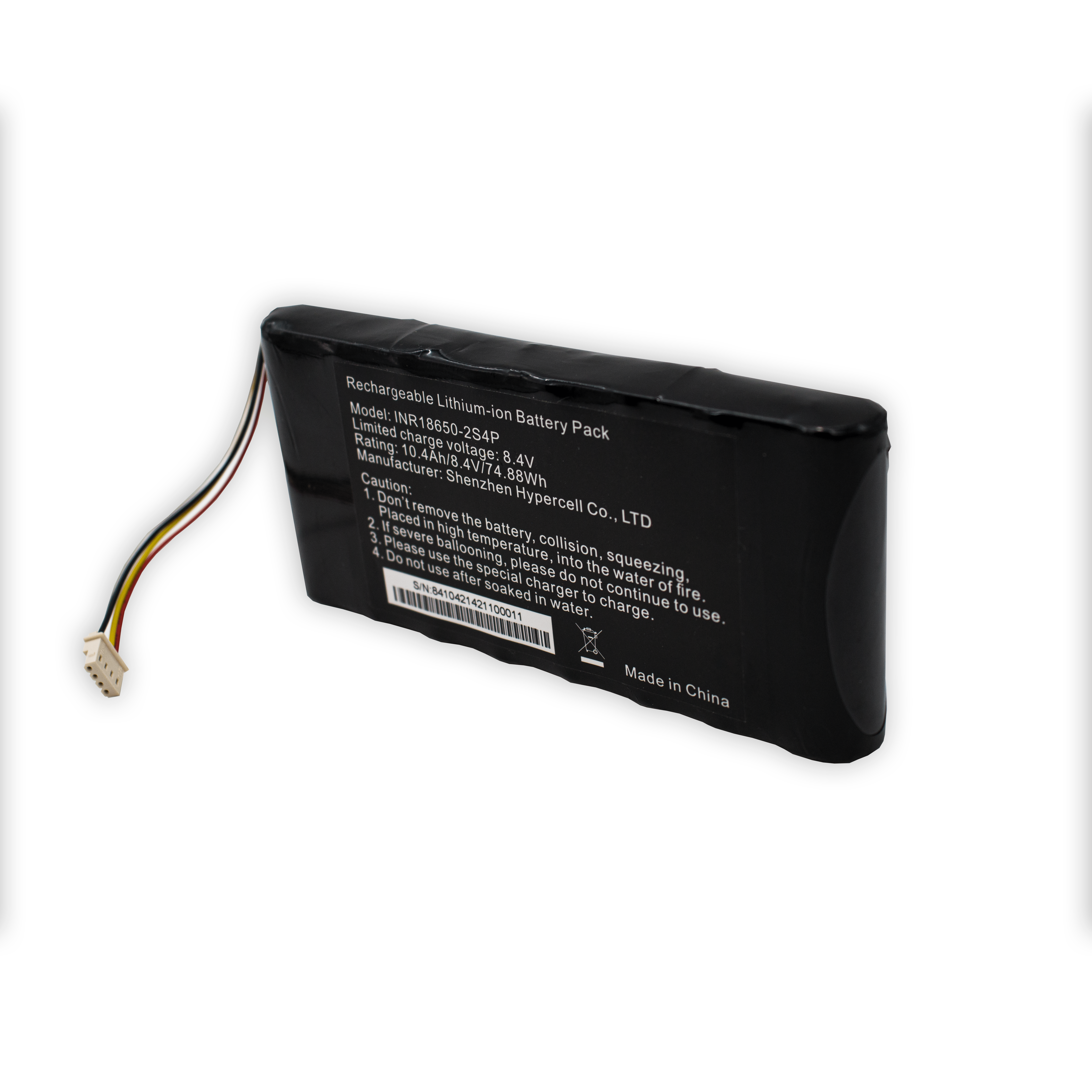
A professionally assembled battery pack, demonstrating precision in a Battery Assembling Factory.
Conclusion: Making an Informed Decision
Choosing the right Battery Assembling Factory is a strategic decision. By meticulously evaluating your application needs, the factory's technical capabilities, quality certifications, and their ability to partner in R&D, you can secure a reliable power source for your product. Partnering with an experienced manufacturer like Hypercell not only ensures a high-quality Customized Li-ion Battery but also provides the technical partnership needed to navigate the complexities of modern battery-powered device development.
For more information on their specific solutions for Li-ion Cylindrical Battery, Li-Polymer Battery, or LiFePO4 Battery needs, visit www.hypercellbattery.com or contact their team at info@hypercellbattery.com / Tel: +86 755 2376 4134.
Have Questions or Need More Details?
Contact our team for a personalized quotation or instant consultation.
Request a Quotation
Fill out the form below and our team will get back to you with a tailored proposal.
WhatsApp Direct Chat
Prefer to chat in real-time? Message us on WhatsApp for instant assistance & quick answers.
- Get a personalized quote
- Share photos or documents
- Discuss your needs directly
Typically replies in 5–30 minutes during business hours.