
How to Choose the Right Battery Assembling Factory for Your Customized Li-ion Battery Project
Navigating the Maze: A Practical Guide to Selecting Your Ideal Battery Assembling Partner
In today's fast-evolving tech landscape, the heart of your product—whether it's a cutting-edge medical device, a robust industrial usage battery pack, or a sleek consumer electronics gadget—often lies in its power source. Choosing the right Battery Assembling Factory is not just a procurement decision; it's a strategic partnership that impacts product performance, safety, time-to-market, and ultimately, your brand's reputation. With the demand for Customized Li-ion Battery solutions soaring across sectors like Robot & E-Mobility, IoT Device Battery applications, and more, making an informed choice has never been more critical.
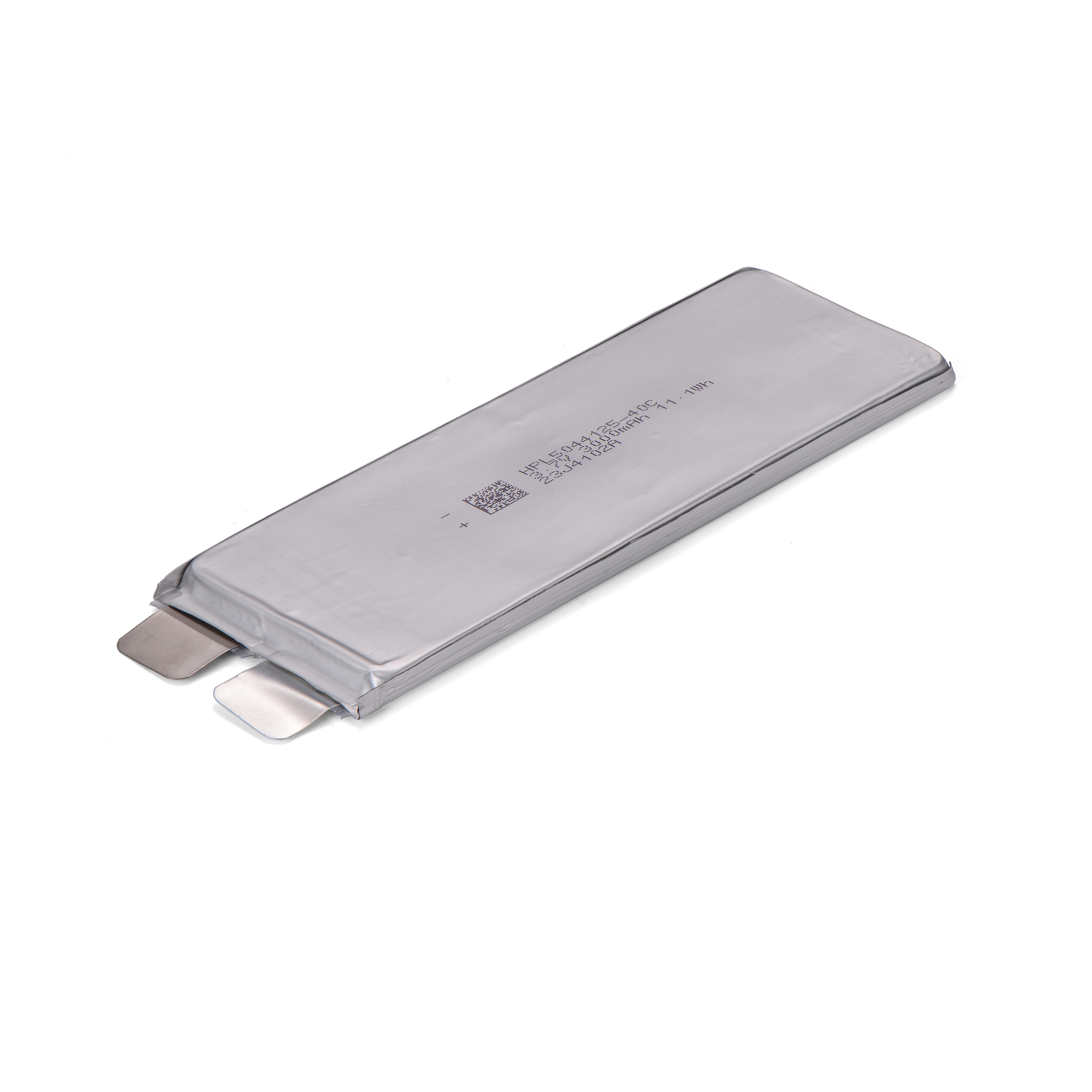
Li-Polymer Battery assembly in a modern facility requires precision and stringent quality control.
Step 1: Define Your Technical & Application Requirements
Before you even start searching, crystallize your needs. The battery for an Analyzer used in a lab has vastly different demands than one powering an outdoor IoT Device.
- Chemistry Choice: Do you need the high energy density of a standard Li-ion Cylindrical Battery, the flexible form factor of a Li-Polymer Battery, or the superior safety and longevity of a LiFePO4 Battery for demanding industrial usage?
- Performance Parameters: Voltage, capacity (mAh/Ah), discharge rate (C-rate), cycle life, and operating temperature range.
- Form Factor & Customization: Is a standard pack sufficient, or do you need a Customized Li-ion Battery with specific dimensions, connectors, or housing?
- Certifications: Industry-specific certifications (e.g., for Medical Device Battery applications) are non-negotiable.
Step 2: Evaluate Core Manufacturing Capabilities & Expertise
Look beyond marketing claims. A true partner should demonstrate proven expertise.
Vertical Integration
Does the factory control key processes from cell sourcing to BMS design and final pack assembly? This reduces supply chain risks. For instance, Hypercell, with its factories in Dongguan and a strong R&D team, exemplifies vertical capabilities, ensuring quality from raw materials to finished Industrial Usage Battery packs.
Technology Portfolio
Can they handle multiple chemistries? A factory proficient in both Li-ion Cylindrical and Li-Polymer Battery assembly offers more flexible solutions. Leading players are also investing in next-gen tech; Hypercell's R&D, for example, extends to solid-state and sodium-ion batteries.
Step 3: Scrutinize Quality Management & Certifications
Quality is paramount, especially for batteries powering critical devices. Request evidence.
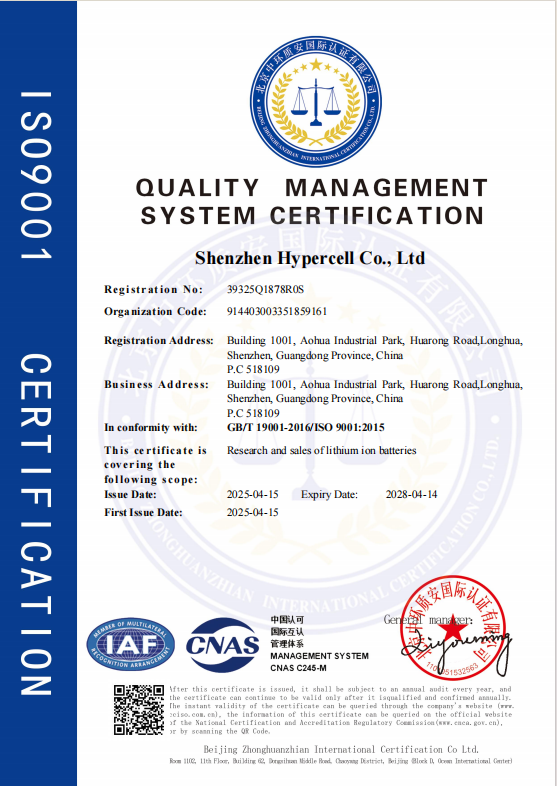
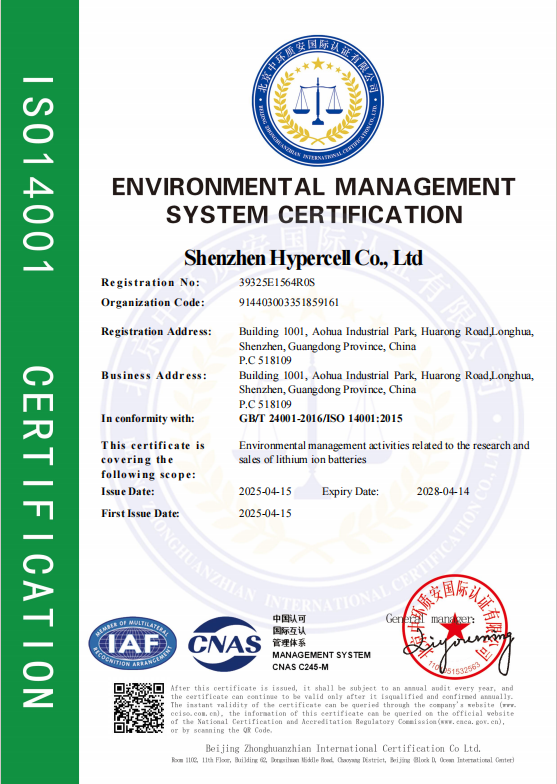
- International Standards: Look for ISO 9001 (Quality Management) and ISO 14001 (Environmental Management) certifications. These are baseline indicators of a systematic approach.
- Product-Specific Certifications: For global markets, check for CB, UN38.3 (for transport), RoHS, and others. A reliable Battery Assembling Factory will have these readily available.
- Testing Facilities: In-house testing for capacity, cycle life, safety (overcharge, short circuit), and environmental stress is crucial.
As a case in point, Hypercell is a qualified ISO9001:2015 and ISO14001:2015 enterprise, holding additional certificates like CB, RoHS, and transport classifications, which underscores its commitment to global compliance and safety for its Consumer Electronics Battery and Medical Device Battery lines.

Step 4: Assess Scalability, Communication, and After-Sales Support
Your partner should grow with you.
Scalability: Can they handle prototypes, small batches, and scale to mass production? A daily output like Hypercell's 30MWh indicates strong capacity. Check their supply chain resilience to avoid disruptions.
Communication & Collaboration: The best factories act as solution providers. Do they have a dedicated engineering team to discuss your Customized Li-ion Battery needs for an Analyzer or Robot & E-Mobility application? Clear communication channels are vital.
After-Sales & Warranty: Understand their policy on defective products, technical support, and lifecycle management.
Step 5: Conduct Due Diligence & Factory Audit
Whenever possible, visit the factory or conduct a virtual audit.
- Observe the Shop Floor: Look for organization, cleanliness (especially for Li-Polymer Battery assembly which is sensitive to contamination), and use of automated equipment.
- Meet the Team: Engage with their R&D and quality control personnel. Hypercell's team of doctors, masters, and senior engineers is a significant asset for complex projects.
- Check References: Ask for case studies or client testimonials, particularly in your target sector (e.g., IoT Device Battery, Medical Device).
Why Hypercell Stands Out as a Strategic Battery Assembling Partner
With over 18 years of experience, Hypercell has positioned itself as more than just a manufacturer. It's a solutions partner. Headquartered in Shenzhen with operations in Dongguan, the company brings deep expertise across Li-ion Cylindrical Battery, Li-Polymer Battery, and LiFePO4 Battery technologies. Their focus on Customized Li-ion Battery solutions is backed by a strong R&D team that tackles challenges from new materials to battery management circuits.
Their application expertise spans the critical fields of Industrial Usage Battery, Medical Device Battery, Consumer Electronics Battery, Analyzer power supplies, and batteries for Robot & E-Mobility and IoT Device Battery applications. This cross-industry knowledge allows them to anticipate needs and deliver robust, reliable power solutions.
Contact Hypercell for a consultation:
Tel: +86 755 2376 4134 | Email: info@hypercellbattery.com
Website: www.hypercellbattery.com
Address: Room 2706-2707, Baoshan Shidai Building, Minqiang Community, Longhua District, Shenzhen 518131 Guangdong, China.
Choosing the right Battery Assembling Factory is a multifaceted process. By following these steps—clearly defining needs, evaluating technical depth, verifying quality systems, and assessing partnership potential—you can forge a relationship that powers not just your products, but your innovation and market success for years to come. In a world increasingly dependent on smart, portable power, your battery partner is a key pillar of your technological foundation.
Have Questions or Need More Details?
Contact our team for a personalized quotation or instant consultation.
Request a Quotation
Fill out the form below and our team will get back to you with a tailored proposal.
WhatsApp Direct Chat
Prefer to chat in real-time? Message us on WhatsApp for instant assistance & quick answers.
- Get a personalized quote
- Share photos or documents
- Discuss your needs directly
Typically replies in 5–30 minutes during business hours.