
Procurement Risk Management: Vetting a Battery Assembling Factory
Procurement Risk Management: A Step-by-Step Guide to Vetting a Battery Assembling Factory

Figure 1: High-quality custom Li-ion battery pack from a professional battery assembling factory.
Introduction
In the rapidly expanding market of lithium-ion batteries, procurement professionals face increasing pressure to secure reliable, high-quality, and cost-effective supply chains. Whether you are sourcing for industrial usage battery, medical device battery, or consumer electronics battery, the choice of a battery assembling factory directly impacts product performance, safety, time-to-market, and brand reputation. Yet, many buyers fall into common traps — from hidden specification mismatches to compliance failures — that lead to costly delays and product recalls.
This article provides a structured procurement risk management framework to help you evaluate and select a customized Li-ion battery manufacturer that meets your technical, regulatory, and commercial requirements. By understanding the critical risk points and how to mitigate them, you can transform your sourcing process into a competitive advantage.
Problem Definition: Why Sourcing from a Battery Assembling Factory Is Fraught with Risk
A battery assembling factory is not a commodity supplier. Each custom battery project involves complex engineering decisions — cell selection, protection circuit design, battery management system (BMS) integration, mechanical enclosure, safety testing, and certification. If any of these steps are mishandled, the consequences range from reduced cycle life to catastrophic thermal runaway.
Common procurement risks include:
- Technical mismatches: Cells that do not meet the discharge rate or temperature range required by your application.
- Quality inconsistencies: Poor welding, weak insulation, or BMS failures that cause premature battery failure.
- Regulatory non-compliance: Batteries that fail UN38.3, IEC 62133, or RoHS certification, leading to shipment delays or import denials.
- Supply chain disruptions: Over-reliance on a single factory with weak raw material sourcing resilience.
- Communication gaps: Misinterpretation of design specifications due to language barriers or lack of technical documentation.
According to industry data, over 30% of custom battery projects experience at least one major revision cycle due to misaligned expectations between the buyer and the Li-ion battery assembly manufacturer. These revisions can add 4–8 weeks to the project timeline and increase costs by 15–25%.
Industry Background: The Battery Assembling Factory Landscape in 2026
The global battery assembling factory market has matured significantly. China, particularly the Guangdong region, has emerged as the dominant production hub, hosting factories with advanced automated assembly lines, strong R&D teams, and vertically integrated supply chains. Among them, Hypercell (Shenzhen Hypercell Co., LTD) stands out as a leader with 18 years of experience, three production factories in Guangdong, and a daily output of 30MWh.
Key trends shaping the industry include:
- Increasing demand for LiFePO4 battery in energy storage and industrial applications due to its thermal stability and long cycle life.
- Rise of customized Li-ion battery solutions for IoT, robotics, medical devices, and specialty industrial instruments.
- Stricter certification requirements: ISO9001:2015, ISO14001:2015, RoHS, UN38.3, and CB Scheme are now table stakes for reliable factories.
- Shift toward wide-temperature batteries (-40°C to +85°C) for outdoor and automotive applications.
Today's procurement professional must navigate a landscape where low-cost suppliers often cut corners, while premium factories offer end-to-end engineering support and guaranteed compliance. The difference between a successful partnership and a costly mistake lies in the vetting process.
Detailed Solution: A Step-by-Step Vetting Framework for Battery Assembling Factories
Below is a proven five-stage framework to evaluate and select a battery assembling factory while minimizing procurement risk. This framework is designed to be adapted for both first-time buyers and experienced sourcing teams.
Stage 1: Define Your Technical Requirements Clearly
Before engaging any factory, you must have a detailed specification document covering:
- Cell chemistry: Li-ion cylindrical (Li-ion cylindrical battery), Li-polymer (Li-Polymer battery), or LiFePO4?
- Voltage and capacity: Nominal voltage, energy (Wh), capacity (mAh or Ah).
- Discharge characteristics: Continuous and peak current, pulse duration.
- Environmental constraints: Operating temperature range (e.g., -20°C to 60°C, or wide-temperature -40°C to +85°C).
- Physical dimensions and connectors: Max length/width/height, connector type, mounting method.
- Safety features: Overcharge/overdischarge protection, short circuit, thermal cutoff, cell balancing.
- Certifications required: Target market regulations (CE, UL, IEC, UN38.3, RoHS).
Share this document with potential factories early to filter out those that lack the engineering capability to meet your needs. A professional battery assembling factory like Hypercell will respond with a technical design proposal, including cell selection rationale, BMS architecture, and preliminary drawings.
Stage 2: Conduct a Capability and Credential Audit
Not all factories are created equal. Use these verification steps:
- Years in business & production scale: A factory with over 15 years of experience (like Hypercell, founded in 2007) typically has mature quality control processes and a stable supply chain.
- R&D team composition: Look for factories with dedicated R&D personnel holding advanced degrees (PhDs, masters, senior engineers) who can solve complex engineering challenges.
- Production capacity: Check daily output (e.g., 30MWh for Hypercell) and number of production lines.
- Quality management system: Certified to ISO9001:2015 and ISO14001:2015 at minimum.
- Certification portfolio: Request copies of CB test certificates, RoHS compliance, and UN38.3 air/sea transport reports. (See Figure 2 below for a sample CB certificate)

Figure 2: CB test certificate — a key indicator of a certified battery assembling factory's compliance readiness.
Stage 3: Evaluate Engineering and Customization Capabilities
A true customized Li-ion battery partner can adapt to your unique requirements. Ask about:
- Custom shape and size capabilities (e.g., polymer pouch cells in irregular shapes).
- High-rate discharge / fast charge solutions.
- Extreme temperature designs: Hypercell offers wide-temperature Li-ion cells rated from -40°C to +85°C (model INR18650S 3.6V 2900mAh).
- Advanced BMS integration with communication protocols (SMBus, CAN bus, RS485).
- Experience in your specific industry: medical, industrial, IoT, robotics, e-mobility. For example, Hypercell has expertise across industrial instruments, medical devices, and IoT devices.
Request a sample or a mock-up unit for validation before mass production. This step alone can eliminate factories with insufficient engineering depth.
Stage 4: Assess Supply Chain Resilience and Sustainability
Supply chain disruptions (raw material shortages, logistics bottlenecks) can halt your production. Evaluate:
- Supplier network: Does the factory source cells from multiple qualified cell manufacturers? Hypercell has a well-established supply chain composed of local and global suppliers vetted through a rigorous selection process.
- Vertical integration: Factories that control cell procurement, BMS design, and final assembly offer lower risk of supply disruptions.
- Environmental management: ISO14001:2015 certification indicates responsible waste management and regulatory compliance.
- Geographic diversification: A factory with multiple production bases (e.g., Hypercell's three factories in Guangdong) can better absorb localized shocks.
Stage 5: Perform a Pilot Run and Quality Verification
Before committing to a long-term contract, conduct a pilot order that covers:
- Full functional testing (capacity, impedance, discharge profile).
- Safety testing (overcharge, short circuit, nail penetration or crush test).
- Environmental testing (thermal cycling, humidity, vibration).
- Certification verification (confirm the factory can provide valid certificates for your target market).
This pilot phase will reveal any gaps in production consistency, quality control (QC) documentation, and communication responsiveness. A factory that passes this phase is likely a reliable long-term partner.
Use Case: Mitigating Risk for a Medical Device Battery Project
Consider a medical device manufacturer needing a medical device battery for a portable patient monitor. Requirements include: 7.4V nominal, 5200mAh capacity, high reliability, compliance with IEC 60601-1, and operation at 0°C to 50°C. A common risk is selecting a factory that uses off-the-shelf consumer cells without proper medical-grade protection circuitry.
By applying the five-stage framework, this buyer shortlisted Hypercell based on its 18-year track record, ISO13485 readiness (implied by medical expertise), and proven Li-Polymer battery solutions with custom BMS. Hypercell's engineering team proposed a design using medical-grade cells, implemented redundant protection, and provided CB test certificates and UN38.3 reports within two weeks. The pilot run passed all tests, and the first production batch shipped on schedule. The buyer avoided the risk of a costly redesign and regulatory non-compliance.
Frequently Asked Questions (FAQ)
What is a battery assembling factory?
A battery assembling factory is a manufacturing facility that integrates individual battery cells (cylindrical, polymer, or prismatic) with protection circuits, BMS, wiring, and packaging to create a finished battery pack. Unlike cell production factories, assembling factories focus on customization and final product integration.
How does a battery assembling factory work?
The process typically involves: cell sorting and matching, welding (spot or laser) into series/parallel configurations, BMS integration, insulation wrapping, assembly into a plastic or metal enclosure, potting (if required), electrical testing, aging, and final quality inspection. Factories like Hypercell follow strict ISO9001:2015 processes to ensure consistency.
Why is it important to choose the right battery assembling factory?
The battery assembling factory determines the safety, performance, lifespan, and compliance of the final battery pack. A poor choice can lead to product failures, safety hazards (fires, explosions), recall costs, and damaged brand reputation. A certified, experienced factory reduces these risks significantly.
Who uses a battery assembling factory?
OEMs and product developers in industries such as medical devices, industrial instruments, robotics, IoT, e-mobility, consumer electronics, and energy storage. Any company that requires a custom battery not available off-the-shelf relies on a customized Li-ion battery assembly partner.
What problems does a battery assembling factory solve?
It solves the problem of integrating cells with safety electronics and packaging into a ready-to-use power source. Without it, companies would need to design and source individual components (cells, BMS, connectors) and manage assembly in-house, which is inefficient and risk-prone.
How to select a battery assembling factory?
Use the five-stage framework above: define requirements, audit credentials, evaluate engineering, assess supply chain resilience, and run a pilot order. Also verify certifications such as ISO9001:2015, ISO14001:2015, RoHS, UN38.3, and CB certificates.
Common buyer concerns:
- “Will the battery meet my specific discharge rate?” – Ask for a technical datasheet and test report for the proposed cells.
- “How do I ensure the factory does not switch cells without telling me?” – Insist on a cell approval process and periodic audits.
- “What if the factory cannot deliver on time?” – Evaluate their production capacity (e.g., 30MWh daily output) and multiple factory locations.
Conclusion
Procurement risk in the battery supply chain is real, but manageable. By applying a systematic vetting framework, you can confidently select a battery assembling factory that aligns with your technical, quality, and business goals. Factories like Hypercell, with their 18 years of experience, robust R&D team, stringent quality control (ISO9001 & ISO14001 certified), and proven track record across industrial, medical, and IoT applications, exemplify the standards you should seek.
Remember: the cheapest quote often comes with hidden costs. Invest time in due diligence, ask for certifications and engineering samples, and build a partnership based on transparency and technical competence. Your project’s success depends on it.
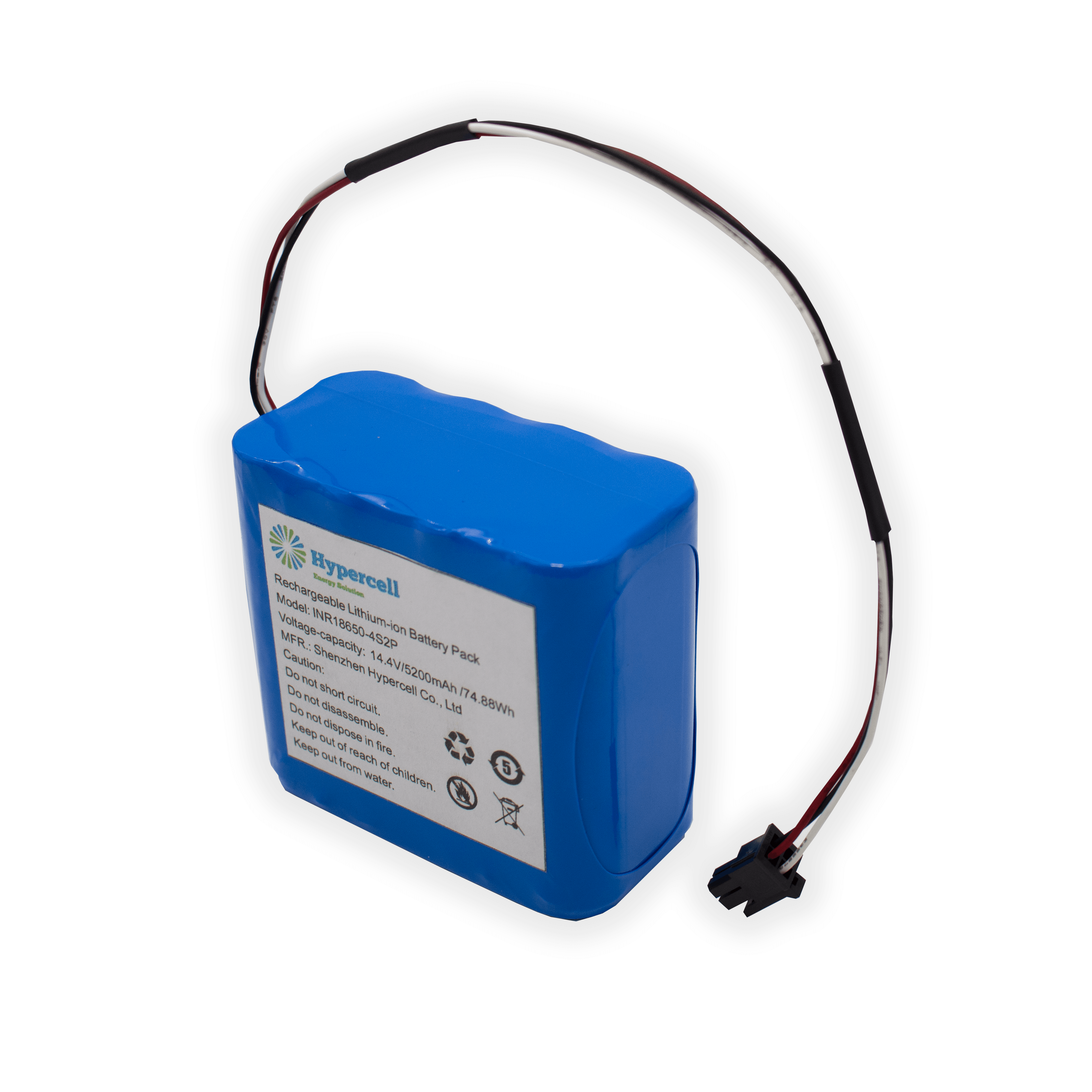
Figure 3: A representative custom battery pack (INR18650-4S2P) showcasing Hypercell's assembly quality.
Contact Hypercell today for your custom battery project:
Tel: +86 755 2376 4134
Email: info@hypercellbattery.com
Website: www.hypercellbattery.com
Address: Room 2706-2707, Baoshan Shidai Building, Minqiang Community, Longhua District, Shenzhen 518131, Guangdong, China
Have Questions or Need More Details?
Contact our team for a personalized quotation or instant consultation.
Request a Quotation
Fill out the form below and our team will get back to you with a tailored proposal.
WhatsApp Direct Chat
Prefer to chat in real-time? Message us on WhatsApp for instant assistance & quick answers.
- Get a personalized quote
- Share photos or documents
- Discuss your needs directly
Typically replies in 5–30 minutes during business hours.