
Professional Buyer's Guide: Selecting a High-Quality Battery Assembling Factory for Custom Li-ion Solutions
In the rapidly evolving landscape of portable power, selecting the right battery assembling factory is a critical decision that directly impacts product performance, safety, and supply chain stability. For procurement professionals sourcing Li-ion Cylindrical Batteries, Li-Polymer Batteries, LiFePO4 Batteries, or Customized Li-ion Battery packs for applications ranging from Medical Devices and Consumer Electronics to Industrial Usage, Analyzers, Robot & E-Mobility, and IoT Devices, a systematic evaluation framework is essential. This guide outlines key criteria to help you identify and partner with a reliable, technologically advanced battery manufacturer.
1. Core Competencies and Technical Expertise
The foundation of a capable battery assembling factory lies in its depth of experience and technical prowess. Look for manufacturers with a proven track record spanning multiple years and a diverse portfolio.
- Experience & Scale: An established history indicates refined processes and resilience. For instance, Hypercell, a battery manufacturer founded in 2007, operates multiple production facilities in Guangdong with over 1200 staff, demonstrating significant industrial capacity and 18 years of accumulated expertise in addressing complex application demands across various sectors.
- R&D Capability: Innovation is not optional. A strong in-house R&D team, often comprising doctors, masters, and senior engineers, is crucial for developing new materials, advanced management circuits, and bespoke solutions. Leading factories invest in next-generation technologies like solid-state and sodium-ion batteries while solving immediate challenges such as high-rate discharge, wide-temperature operation (-40℃ to +85℃), and special form factors.

Example of specialized battery technology: A wide-temperature Li-ion cylindrical cell suitable for extreme environment applications.
2. Manufacturing Capabilities and Product Range
A factory's ability to deliver hinges on its production flexibility and technological breadth. Assess their capabilities against your specific product needs.
- Product Portfolio: A comprehensive range, including standard and Customized Li-ion Battery solutions, is a positive indicator. Key product lines should cover:
- Li-ion Cylindrical Battery (e.g., INR18650, INR21700 packs)
- Li-Polymer Battery in various slim profiles
- LiFePO4 Battery for high-safety and long-cycle-life requirements
- Customization & Integration: Beyond cell assembly, evaluate their packing technology department's ability to support full integration, including industrial design, electronics, software, and structural engineering. This is vital for developing batteries for Medical Devices or complex IoT Device Battery systems.
- Output Capacity: Verify daily or monthly output figures to ensure they can meet your volume requirements without compromising lead times.
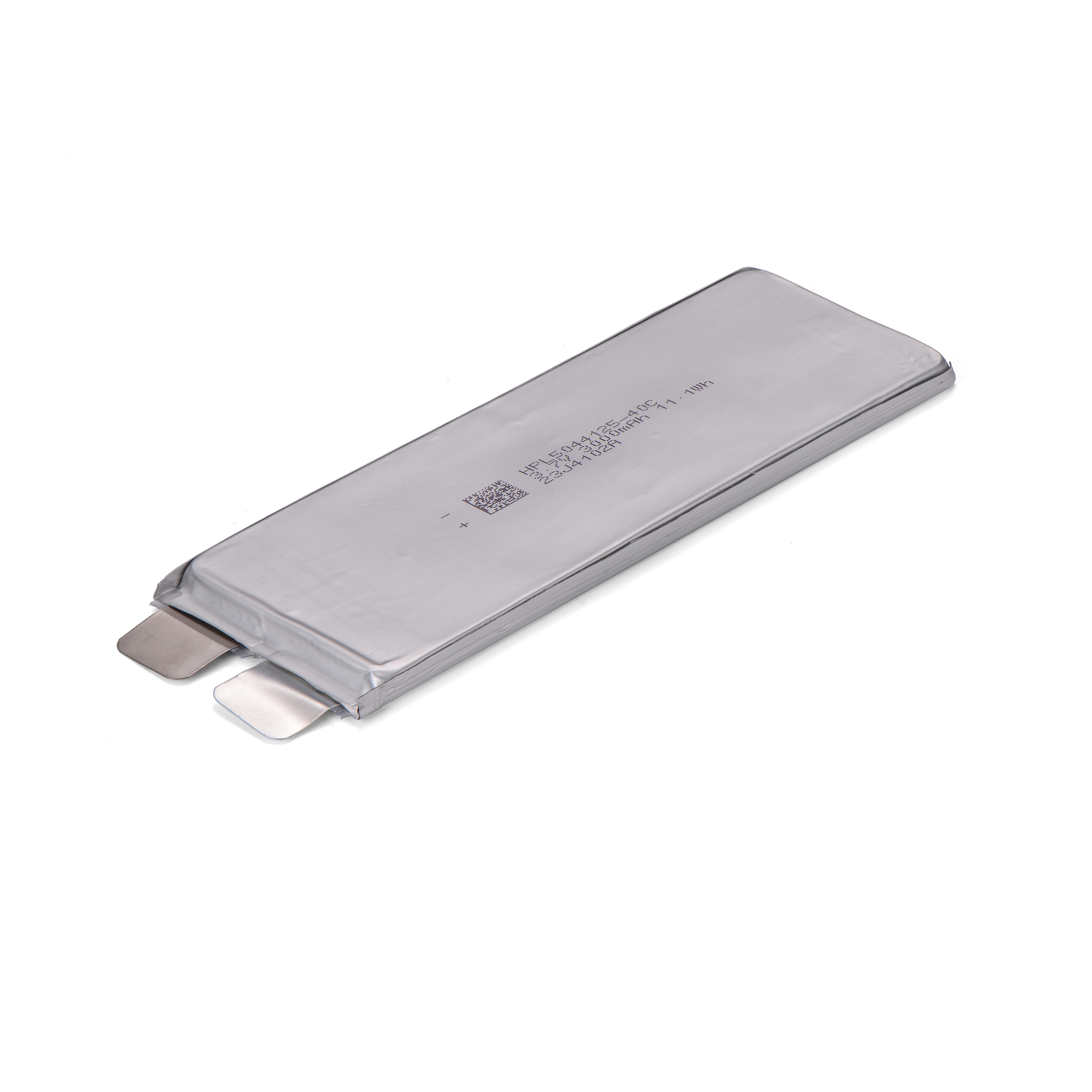

Diverse product examples: A high-capacity Li-Polymer cell and a large-format battery pack for Industrial Usage or E-Mobility.
3. Quality Assurance and Compliance Standards
Quality and safety are non-negotiable in the battery industry. Rigorous certifications and a robust quality management system are mandatory checkpoints.
- International Certifications: Essential certifications include:
- ISO 9001:2015 for quality management systems.
- ISO 14001:2015 for environmental management.
- CB Test Certificate for international safety compliance.
- RoHS ensuring restriction of hazardous substances.
- Transport certifications (UN38.3, evidenced by Identification and Classification Reports for Air and Sea Transport) for safe logistics.
- Supply Chain Control: A vertically integrated manufacturer or one with a vetted, stable supply chain for raw materials (like cathodes, anodes, electrolytes) minimizes the risk of disruptions and quality inconsistencies.
- Testing Protocols: Inquire about in-house testing facilities for performance, cycle life, environmental stress, and safety tests (overcharge, short circuit, crush).
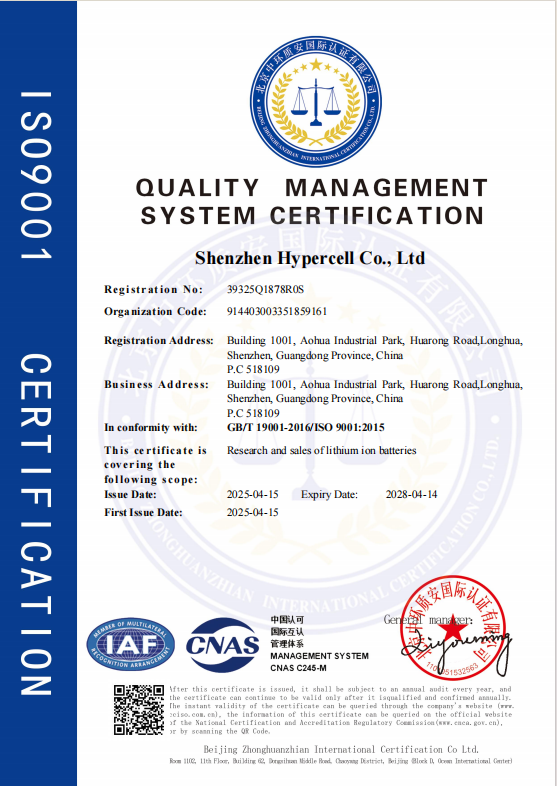
Certifications like ISO 9001 are fundamental indicators of a factory's commitment to systematic quality management.
4. Industry Application Experience
Experience in your specific vertical market translates to a deeper understanding of unique requirements and regulatory landscapes.
When evaluating a Battery Assembling Factory, probe their project history in:
- Medical Device Battery: Requires stringent safety, reliability, and often custom form factors. Manufacturers must understand relevant medical standards.
- Industrial Usage Battery: Demands robustness, long cycle life, and performance under harsh conditions for equipment like Analyzers.
- Consumer Electronics Battery: Focuses on energy density, slim design, and fast-charge capabilities.
- Robot & E-Mobility: Needs high-power discharge, battery management systems (BMS), and structural durability.
- IoT Device Battery: Often requires ultra-long standby, low self-discharge, and miniaturization.
A manufacturer like Hypercell, which explicitly serves these sectors, can typically provide more targeted and reliable solutions. You can learn more about their approach at their official website: www.hypercellbattery.com.
5. Communication and Support Ecosystem
The partnership extends beyond the initial purchase. Evaluate their support structure.
- Technical Consultation: Ability to provide expert guidance during the design and prototyping phases.
- Project Management: Clear points of contact and responsive communication channels (e.g., info@hypercellbattery.com, Tel: +86 755 2376 4134).
- After-Sales Service: Warranty terms, troubleshooting support, and lifecycle management policies.
Making the Informed Choice
Selecting a battery assembling factory is a strategic procurement decision. By meticulously assessing a supplier's technical expertise, manufacturing capabilities, quality certifications, industry-specific experience, and support ecosystem, buyers can mitigate risk and secure a partnership that ensures a stable supply of high-performance, safe, and innovative battery solutions. Prioritize factories that demonstrate a commitment to R&D, stringent quality control like ISO 9001 and ISO 14001, and possess a proven ability to deliver customized Li-ion Battery packs for demanding applications. This due diligence is the key to powering your products reliably in a competitive global market.
Have Questions or Need More Details?
Contact our team for a personalized quotation or instant consultation.
Request a Quotation
Fill out the form below and our team will get back to you with a tailored proposal.
WhatsApp Direct Chat
Prefer to chat in real-time? Message us on WhatsApp for instant assistance & quick answers.
- Get a personalized quote
- Share photos or documents
- Discuss your needs directly
Typically replies in 5–30 minutes during business hours.