
How to Choose the Right Battery Assembling Factory for Your Industrial, Medical, and IoT Projects: A Comprehensive Guide
How to Choose the Right Battery Assembling Factory for Your Industrial, Medical, and IoT Projects
Selecting the right Battery Assembling Factory is a critical decision that impacts the performance, safety, and reliability of your products. Whether you need Li-ion Cylindrical Battery packs for an Analyzer, Customized Li-ion Battery solutions for Medical Device Battery applications, or high-power LiFePO4 Battery systems for Robot&E-Mobility, the manufacturing partner you choose can make or break your project. This guide provides a step-by-step framework to help you evaluate and select a factory that aligns with your technical requirements, quality standards, and business goals.
Step 1: Define Your Application and Technical Specifications
Clearly outline your project's needs. This is the foundation of your search.
- Application: Is it for Industrial Usage Battery (e.g., power tools, backup systems), Consumer Electronics Battery, IoT Device Battery, or a specialized Medical Device Battery? Each has unique safety and performance standards.
- Chemistry & Form Factor: Decide between Li-ion Cylindrical Battery (high energy density, cost-effective), Li-Polymer Battery (lightweight, flexible shapes), or LiFePO4 Battery (superior safety, long cycle life).
- Key Parameters: Voltage, capacity (mAh/Ah), discharge rate (C-rate), operating temperature range, cycle life, and size constraints.
A factory like Hypercell, with 18 years of experience across these diverse sectors, can provide valuable consultation at this stage.
Step 2: Assess Technical Capabilities and R&D Strength
Look beyond assembly lines. A true partner invests in innovation.
- R&D Team: Inquire about the team's composition. For instance, Hypercell boasts a strong R&D team of doctors, masters, and senior engineers focused on new materials, managing circuits, and next-gen tech like solid-state batteries.
- Customization Expertise: Can they handle Customized Li-ion Battery requests for special shapes, high/low-temperature performance, or fast-charge capabilities? Review their portfolio for complex projects.
- Prototyping & Testing: Ensure they have facilities for prototyping and rigorous testing (electrical, environmental, safety) before mass production.
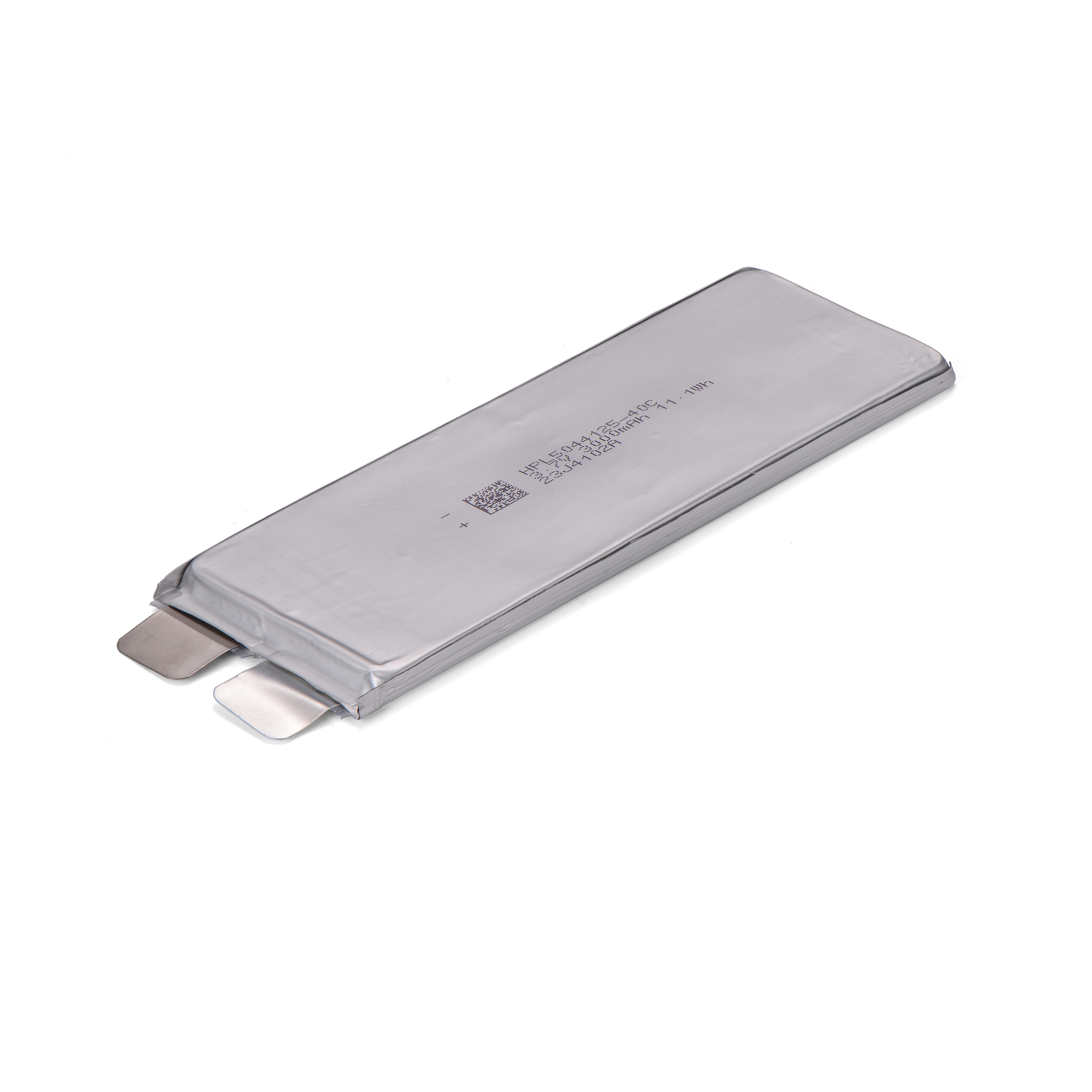

Hypercell's HPL5044125-40C Li-Polymer Battery, an example of high-discharge rate capability for demanding applications.
Step 3: Scrutinize Quality Control and Certifications
Quality is non-negotiable, especially for medical and industrial applications.
- Certifications: A reputable Battery Assembling Factory must hold international certifications. Hypercell is a qualified ISO9001:2015 and ISO14001:2015 enterprise, ensuring strict quality and environmental management systems.
- Compliance: Check for relevant product certifications like RoHS (restriction of hazardous substances), CB (safety), and UN38.3 for transport. These are crucial for global market access.
- Process Control: Ask about their in-line quality checks, failure analysis procedures, and traceability systems.
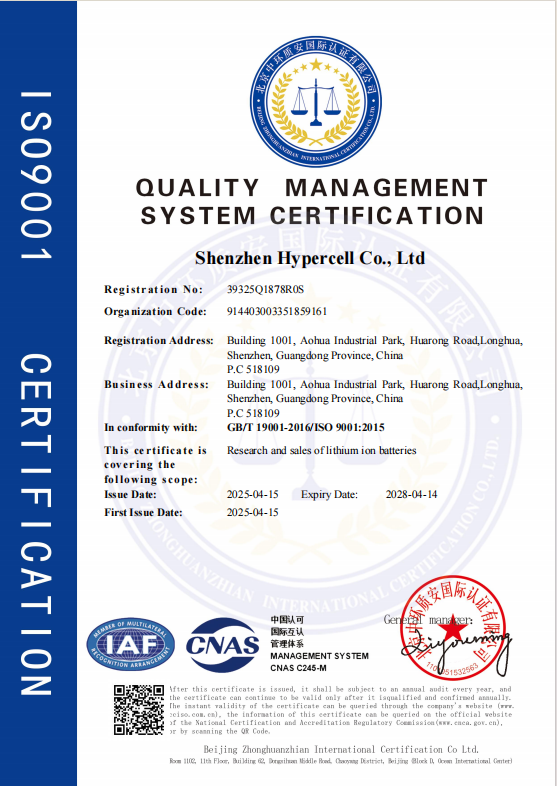


Key certifications held by Hypercell, demonstrating commitment to quality and safety.
Step 4: Evaluate Manufacturing Scale and Supply Chain Stability
Can they deliver your order on time, consistently?
- Production Capacity: Verify daily/monthly output. Hypercell, for example, operates three factories in Guangdong with a 30MWh daily output, indicating robust scale.
- Vertical Integration: Factories with more control over key processes (cell sourcing, BMS design, assembly) offer better cost and quality control.
- Supply Chain: A well-established supply chain with vetted suppliers, as maintained by Hypercell, minimizes the risk of material shortages and disruptions.

Large-scale battery pack assembly, like this INR21700-13S10P, requires advanced manufacturing capabilities.
Step 5: Consider Communication and After-Sales Support
The relationship doesn't end at delivery.
- Technical Support: Does the factory have a dedicated engineering team to support integration, especially for complex Industrial Usage Battery or IoT Device Battery systems?
- Responsiveness: Test their communication during the inquiry process.
- Warranty and Service: Understand their warranty policy and post-sales support structure.
Partnering with an experienced manufacturer like Shenzhen Hypercell Co., LTD ensures you get not just a product, but a comprehensive Customized Li-ion Battery solution backed by nearly two decades of expertise.
Conclusion: Making an Informed Decision
Choosing the right Battery Assembling Factory is a strategic investment. By following this guide—defining your needs, assessing technical depth, verifying quality credentials, evaluating scale, and ensuring strong support—you can identify a partner capable of delivering reliable, high-performance power solutions. For projects requiring Li-ion Cylindrical Battery, Li-Polymer Battery, or LiFePO4 Battery technology, consider reaching out to industry leaders. Hypercell stands as a prime example, combining 18 years of experience, a strong R&D team, strict quality control, and massive production capacity to serve the global markets for Consumer Electronics Battery, Medical Device Battery, Analyzer, Robot&E-Mobility, and IoT Device Battery applications.
Visit www.hypercellbattery.com to explore their capabilities and start a conversation about your next power solution.
Have Questions or Need More Details?
Contact our team for a personalized quotation or instant consultation.
Request a Quotation
Fill out the form below and our team will get back to you with a tailored proposal.
WhatsApp Direct Chat
Prefer to chat in real-time? Message us on WhatsApp for instant assistance & quick answers.
- Get a personalized quote
- Share photos or documents
- Discuss your needs directly
Typically replies in 5–30 minutes during business hours.