
How to Design and Source Customized Medical Device Batteries: A Step-by-Step Guide with Hypercell
How to Design and Source Customized Medical Device Batteries: A Step-by-Step Guide
The medical device industry is undergoing a rapid transformation, driven by portability, connectivity, and patient-centric care. At the heart of this revolution lies a critical component: the power source. From portable analyzers and infusion pumps to wearable monitors and surgical robots, a reliable, safe, and precisely engineered battery is non-negotiable. This comprehensive guide walks you through the essential steps of designing and sourcing a Customized Li-ion Battery for medical applications, highlighting why partnering with an expert Battery Assembling Factory like Hypercell is crucial for success.
Why Customization is Non-Negotiable in Medical Power
Off-the-shelf Li-ion Cylindrical Battery or Li-Polymer Battery packs rarely meet the stringent demands of medical equipment. Medical devices require batteries that are:
- Safe & Reliable: Zero tolerance for failure in life-sustaining equipment.
- Regulatory Compliant: Must adhere to IEC 60601, UN38.3, and other medical safety standards.
- Form-Fit-Function Optimized: Must fit unique device housings, often with space constraints.
- Performance-Tailored: Specific discharge rates, cycle life, and operating temperature ranges (e.g., for Analyzer or cold-chain logistics).
A specialized Battery Assembling Factory with medical experience bridges this gap between standard power and mission-critical application.
Step 1: Define Your Medical Device's Power Profile
Before contacting a supplier, crystallize your requirements. This forms the blueprint for your Customized Li-ion Battery.
| Parameter | Key Questions | Medical Application Example |
|---|---|---|
| Voltage & Capacity | What is the operating voltage? How long must the device run on a single charge? | A portable ultrasound Analyzer may need a high-capacity 14.8V pack for full-day operation. |
| Size & Shape (Form Factor) | What are the exact internal dimensions? Any irregular space? | A wearable cardiac monitor requires an ultra-thin, flexible Li-Polymer Battery. |
| Discharge Rate (C-rate) | Does the device have high peak power demands (e.g., motors, heaters)? | A surgical Robot&E-Mobility tool requires high-rate discharge for precise motor control. |
| Operating Environment | Will it be used in ambulances, cold storage, or sterilized environments? | A vaccine storage IoT Device Battery must perform reliably at low temperatures. |
| Safety & Certification | What medical standards (IEC 60601-1) and transport certifications (UN38.3) are mandatory? | All Medical Device Battery solutions require full compliance for global market access. |
Step 2: Select the Right Battery Chemistry and Technology
Based on your profile, your Battery Assembling Factory partner will recommend the optimal chemistry.
Li-ion Cylindrical Battery (e.g., 18650, 21700)
Best for: High energy density, standardized form factors, cost-effectiveness.
Medical Use: Larger portable devices like monitors, diagnostic carts, or backup power where space allows for standard cells.

Hypercell's high-power INR21700 pack for demanding Industrial Usage Battery and medical applications.
Li-Polymer Battery
Best for: Ultra-thin, lightweight, and custom shapes (pouch cells).
Medical Use: Wearables, implantable device chargers, sleek handheld Analyzer where design is critical.
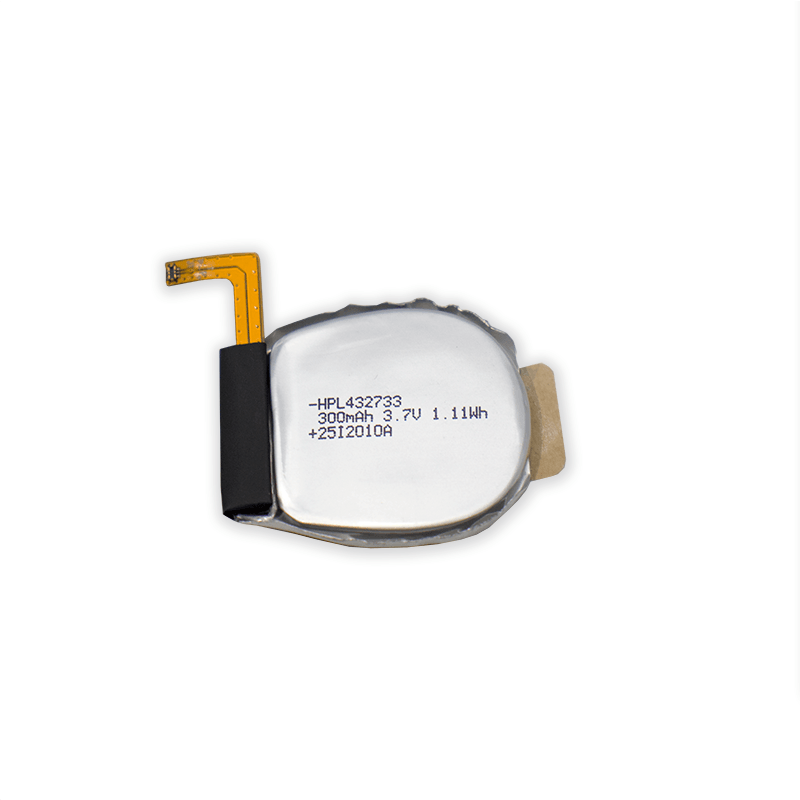
Hypercell's custom-shaped Li-Polymer cells for compact Consumer Electronics Battery and medical devices.
LiFePO4 Battery
Best for: Superior safety, long cycle life, thermal stability.
Medical Use: Critical care equipment, emergency medical devices, and applications where safety outweighs energy density needs.
Step 3: Partner with a Qualified Medical Battery Assembling Factory
This is the most critical step. Not all battery factories are equipped for medical-grade production. Here’s what to look for, using Hypercell as a benchmark:
1 Expertise and Track Record
Hypercell, established in 2007, brings over 18 years of experience in providing Customized Li-ion Battery solutions. Their expertise spans Medical Device Battery, Industrial Usage Battery, and IoT Device Battery applications. A factory with a proven history in your specific vertical understands the unspoken challenges.
2 Integrated R&D and Customization Capability
Medical devices often need "special shape battery solutions." Hypercell’s strong R&D team, comprising doctors, masters, and senior engineers, works on new materials and technologies to meet "special performance" demands like high-rate discharge, fast charge, or wide-temperature operation (-40°C to +85°C). Their packing technology department assists with full integration—from electronics and software to structure and testing.

3 Rigorous Quality Management and Certifications
Medical-grade production demands a culture of quality. Hypercell is a qualified ISO9001:2015 and ISO14001:2015 enterprise. Their strict compliance with these management systems ensures traceability and consistency. Demand to see relevant certifications:
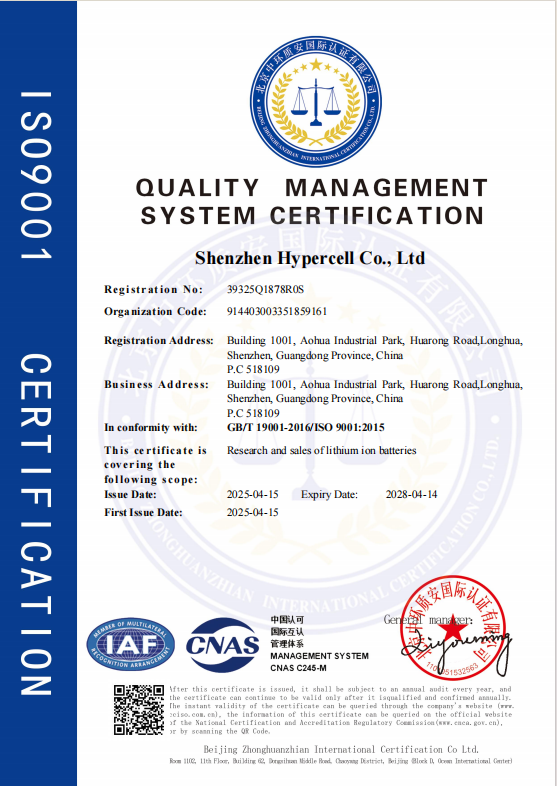
ISO 9001:2015
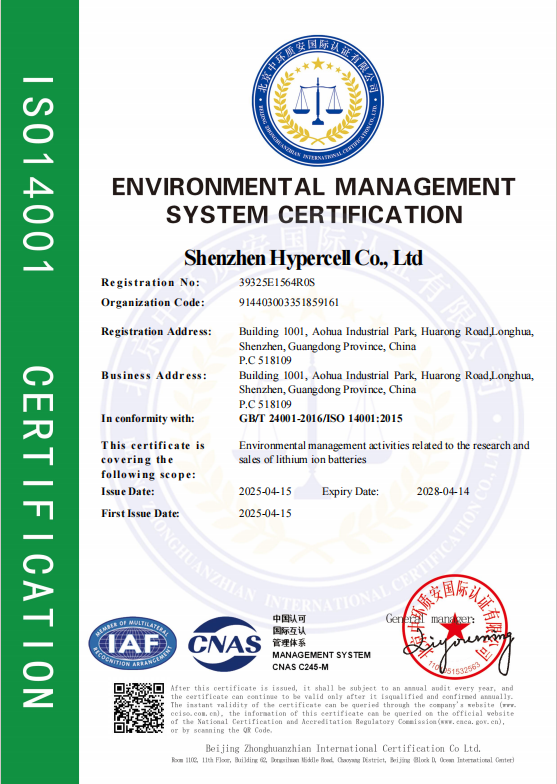
ISO 14001:2015

CB Test Certificate
Additionally, certifications like RoHS and UN38.3 transport reports (for air and sea) are essential for global compliance and safe logistics—all of which Hypercell provides.
4 Scalable Manufacturing and Supply Chain Security
With three production factories in Guangdong and a daily output of 30MWh, Hypercell operates as a vertically integrated Battery Assembling Factory. Their well-established, vetted supply chain mitigates the risk of component shortages, ensuring your Medical Device Battery project can scale from prototype to mass production without disruption.
Step 4: The Collaboration Process – From Prototype to Production
- Initial Consultation: Share your power profile (Step 1). Contact Hypercell at info@hypercellbattery.com or call +86 755 2376 4134.
- Feasibility Study & Proposal: Their engineers will analyze requirements and propose a solution using Li-ion Cylindrical Battery, Li-Polymer Battery, or LiFePO4 Battery technology.
- Prototype Development: Hypercell builds functional samples for your testing and validation.
- Testing & Certification Support: They assist in ensuring the battery pack meets all necessary medical and safety standards.
- Mass Production & Delivery: Once approved, production begins in their automated factories with strict QC at every stage.
Power Your Medical Innovation with Confidence
Sourcing a Customized Medical Device Battery is a complex but manageable process when you follow a structured approach and choose the right partner. By selecting an experienced and certified Battery Assembling Factory like Shenzhen Hypercell Co., LTD, you gain more than a component supplier—you gain a solutions partner dedicated to the safety, reliability, and success of your medical device.
Visit www.hypercellbattery.com to explore their capabilities in Consumer Electronics Battery, Robot&E-Mobility power, and custom IoT Device Battery solutions, and start your medical power project today.
Hypercell – The Pioneer in Customized Medical Power.
Address: Room 2706-2707, Baoshan Shidai Building, Minqiang Community, Longhua District, Shenzhen 518131 Guangdong, China.
Have Questions or Need More Details?
Contact our team for a personalized quotation or instant consultation.
Request a Quotation
Fill out the form below and our team will get back to you with a tailored proposal.
WhatsApp Direct Chat
Prefer to chat in real-time? Message us on WhatsApp for instant assistance & quick answers.
- Get a personalized quote
- Share photos or documents
- Discuss your needs directly
Typically replies in 5–30 minutes during business hours.