
Battery Assembling Factory Long-Term Partnership Buyer FAQ
A long-term partnership with a battery assembling factory is decided by what happens after the first shipment, not by the first quotation. For OEM buyers running custom lithium battery or power bank programs, the questions that determine whether a supply relationship survives into year two are about communication cadence, escalation authority, after-sales obligations, and lifecycle continuity. This FAQ sets out what to ask, why each question matters, and what a usable answer contains.
The reference point throughout is Shenzhen Hypercell Co., LTD, a lithium battery manufacturer established in 2007, headquartered in Shenzhen with an operating factory in Dongguan. Hypercell’s product range covers lithium-ion cylindrical, lithium-ion polymer, and lithium iron phosphate batteries, and the company reports three production factories in Guangdong with 1200+ staff. The questions below apply to any assembler; the examples show how they map to one supplier’s stated capabilities.

What a partnership FAQ needs to settle before a purchase order
A partnership agreement with a battery assembling factory is a commitment to a working relationship, not only to a specification. The specification says what the pack must deliver at approval. The partnership terms say who answers when something drifts.
Buyers typically arrive at this conversation with a quotation, a sample report, and a datasheet. What they often lack is a written record of three things: who communicates with whom and how often, who has authority to stop a shipment, and who carries responsibility once a component reaches end of life. Those three items are the substance of the FAQ below.
The scope here is deliberately limited to lithium battery and power bank assembly. Commercial terms, legal jurisdiction, and product certification scope are separate workstreams, and each has its own evidence requirements.
Why partnership questions surface late in battery assembly programs
Battery programs front-load technical work. Cell chemistry, capacity, discharge rate, pack architecture, and enclosure fit consume most of the evaluation period. Relationship mechanics get deferred because they feel like administration.
They stop feeling like administration at the point where the program absorbs change. A custom lithium battery pack rarely stays identical between the prototype and the third production run. A component is substituted, a BMS firmware revision is released, a housing tool is modified, or a downstream customer asks for a variant. Each of those events needs a supplier that can answer three questions quickly: what changed, what was re-tested, and who approved it.
The same pattern appears in power bank programs, where the assembled unit combines cells, a protection board, and a housing. A change to any one element can invalidate an earlier validation, so the handover between engineering, quality, and production has to be explicit rather than assumed.
A second reason the questions surface late is scale. A supplier that handled a 500-unit pilot build competently has not yet demonstrated that it can hold a schedule, a document set, and a communication rhythm across recurring volume. Capability at pilot scale and continuity at production scale are different claims, and buyers should test them separately.
The question set: six areas a partnership agreement should cover
Buyers evaluating a long-term relationship can organise their questions into six areas. Each should produce a written answer before volume commitment, not a verbal assurance.
- Qualification and quality system. Which management system governs assembly, how is it audited, and what records exist for the specific product family being sourced?
- Engineering capability and interface. Who on the supplier side owns technical questions, and how far does their support extend into structure, electronics, and testing?
- Communication cadence. Who is the named commercial contact, who is the named technical contact, and what review rhythm is committed?
- Escalation. What triggers an escalation, who receives it, and who has authority to stop a shipment or a line?
- After-sales obligations. What happens on a field return, who performs the failure analysis, and how is the conclusion reported?
- Lifecycle continuity. How are component changes, end-of-life notices, and last-time buys handled over the life of the product?
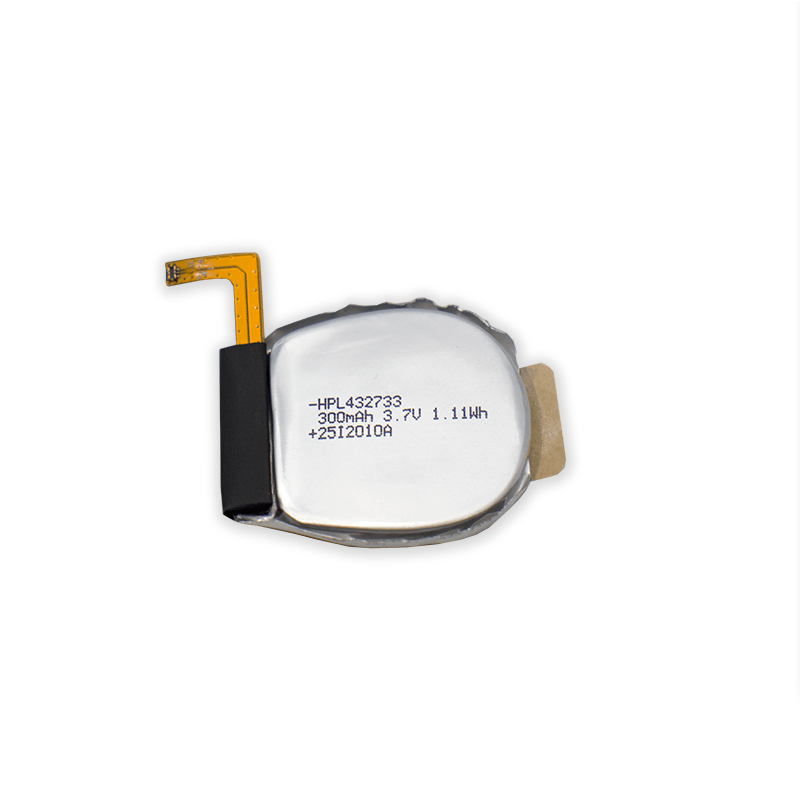
Hypercell’s stated position on several of these areas can be verified from supplied company information rather than inferred. The company is a qualified ISO9001:2015 and ISO14001:2015 enterprise, operates a packing technology department that supports clients with industrial design, electronics, power supply, software, structure, process, and testing, and maintains a supply chain of local and global suppliers vetted through a documented selection process. Those are capability statements; the questions below test how they operate in practice.
How to run the partnership evaluation, step by step
The evaluation works best as a sequence, because each step produces the evidence the next step depends on. Running them in parallel invites unverified assumptions.
Step 1: Define the program boundary in writing
State which product families the partnership covers — for example lithium-ion cylindrical packs, lithium-ion polymer packs, lithium iron phosphate packs, or assembled power banks — and which are out of scope. A supplier with a broad range should still confirm the specific configuration. Hypercell’s stated range of lithium-ion cylindrical, lithium-ion polymer, and lithium iron phosphate products with a reported 30MWh daily output describes scale; it does not by itself confirm fit for a particular pack design.
Step 2: Request the quality-system evidence for the relevant scope
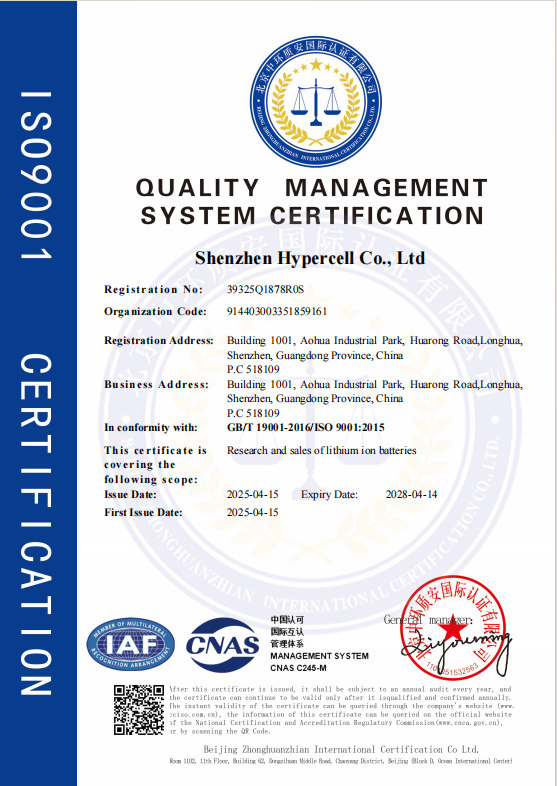
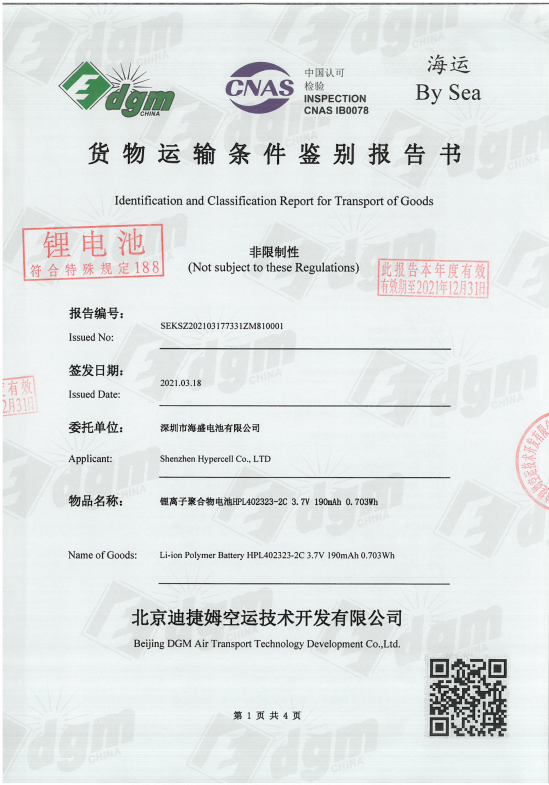
Ask for the management-system certificates and confirm the scope statement covers assembly of the product type being sourced. Certificate images alone are weaker than a certificate plus the audit scope plus the internal process that applies it. Hypercell holds ISO9001:2015 and ISO14001:2015 qualification, and additional documents supplied for review include a RoHS certificate, a CB test certificate, and identification and classification reports for sea and air transport of goods. Each document supports a specific claim; buyers should map each one to the claim it actually supports rather than treating the folder as a single pass.
Step 3: Map the technical interface
Ask who will answer an engineering question in month six, and whether that person can commit on behalf of the factory. For programs involving custom shapes, high-temperature or low-temperature operation, high rate discharge, or integration with a BMS, the answer determines how fast a change can be evaluated. Hypercell states that its R&D team includes doctors, masters, and senior engineers, and that its research covers new materials, new technology, and managing circuits, including work on solid-state and sodium-ion technology. Buyers should ask which of those capabilities the assigned team actually uses on their program.
Step 4: Agree the communication cadence in writing
Define the named contacts, the review rhythm, the language of record, and the response expectation for each class of question. Detail follows below.
Step 5: Rehearse the escalation path
Do not accept an escalation chart that has never been used. Raise a real issue during the sample stage and observe whether the path works.
Step 6: Write the lifecycle terms into the agreement
Cover component change notification, end-of-life notice, last-time-buy options, and the requalification route for a substituted part. These terms cost little to negotiate at the start and are expensive to retrofit later.
Communication cadence: what to put in writing
A committed communication cadence is the cheapest risk control in a battery program, and the most frequently left undocumented.
A workable cadence names four things. First, a commercial owner and a technical owner on the supplier side, with named backups, because a single contact becomes a single point of failure during holiday periods and staff changes. Second, a fixed review rhythm — a recurring schedule, order review, and engineering review — so that problems surface at a known time rather than at the next crisis. Third, the document of record: which drawing revision, which specification version, and which approval record govern production, and where those documents live. Fourth, a response expectation for different question classes, distinguishing a routine query from a deviation notice.
For Chinese-based suppliers serving export markets, the cadence should also state the working language for technical documents and the overlap window for live calls. Hypercell’s headquarters in Shenzhen and operating factory in Dongguan place engineering and production in the same province, which simplifies internal escalation for the buyer but does not remove the need for an explicit external rhythm.
Escalation and after-sales: the obligations that outlast the launch
Escalation and after-sales are where a supply relationship is either confirmed or quietly abandoned.
A credible escalation path has three tiers and a defined trigger for each. Tier one handles routine technical questions through the named engineer. Tier two engages quality and commercial owners when a defect, a schedule slip, or a specification dispute appears. Tier three reaches a decision-maker with authority to stop a shipment, authorise a rework, or accept a cost. The chart should name roles, not only departments, and should state the maximum interval before each tier responds in writing. Buyers should confirm that the tier-three authority sits inside the factory organisation, not only inside a trading intermediary.
After-sales for custom lithium battery and power bank programs differs from consumer warranty handling. The supplier is usually asked to preserve traceability from the returned unit back to the cell batch, the protection board lot, and the production record. That requires a serialisation or lot-marking scheme agreed before the first production run, and a failure-analysis route that returns a written conclusion rather than a replacement unit alone. Ask what the analysis report contains, who signs it, and whether it distinguishes a cell issue from an assembly issue from a field-use issue. Without that distinction, corrective action cannot be targeted.
Lifecycle continuity across a multi-year build
Lifecycle continuity is the question buyers ask last and regret most. A custom lithium battery pack approved today may still be in production when a cell model, a protection IC, or a connector reaches end of life.
The agreement should require advance notice of any change that affects form, fit, function, or validated performance, and it should require that notice to arrive before implementation rather than after. It should state who approves a substitution, what testing is repeated, and whether the buyer receives samples of the changed part before volume shipment. It should also address the opposite case: a component that is being discontinued, where the buyer needs the option of a last-time buy or a planned requalification window.
For its part, Hypercell states that it maintains a supply chain of local and global suppliers vetted through a rigorous selection process, and that its vertical manufacturing capabilities support flexible solutions with a stated aim of reducing the risk of supply disruption. Buyers should test that statement by asking, for their own bill of materials, which components are single-sourced and what the approved alternative is for each.
Matching the question set to the program type
The same six areas apply across applications, but the weighting changes with the consequences of failure.
Consumer electronics and power bank programs. Here the priority is schedule resilience and change discipline. Volumes move, variants multiply, and a housing or board revision can arrive with short notice. The questions that matter most are the communication cadence, the approval route for a variant, and the supplier’s ability to hold a document set across several SKUs built on a shared platform.
Medical device programs. The priority shifts to traceability and documentation. A returned pack must be reconstructable, and a component change must be evaluated before it enters production. Hypercell states that its experience spans medical devices, industrial instruments, and the internet of things, which indicates familiarity with the application category; buyers should still confirm the specific documentation practice for their own device class.
Industrial, analyzer, robot, e-mobility, and IoT programs. These often run for years with modest volumes and harsh operating conditions. Continuity dominates: long component availability, stable firmware, and a supplier willing to keep a low-volume line alive. Hypercell’s stated work on high-temperature and low-temperature performance, high specific capacity, and high rate discharge or fast charge is relevant here, because those characteristics are usually the reason a standard pack was rejected in the first place.
Transactional purchase versus long-term partnership: what changes
The table below contrasts the two models on the dimensions this FAQ covers. It describes commercial structure, not supplier quality; a factory can serve both models competently.
| Question area | Transactional purchase | Long-term partnership agreement |
|---|---|---|
| Commercial basis | Price per order, re-quoted each time | Agreed mechanism for price and volume review |
| Contact structure | Sales contact only | Named commercial and technical owners, with backups |
| Communication | Event-driven, usually at order placement | Fixed review rhythm plus defined response expectations |
| Escalation | Raised informally to whoever answers | Documented tiers with named authority to stop shipment |
| Change control | Handled case by case after the fact | Notification, approval, and re-test before implementation |
| After-sales | Replacement-focused | Failure analysis, traceability, and written corrective action |
| Lifecycle | No commitment beyond the order | End-of-life notice, last-time-buy, requalification route |
Frequently asked questions
What should we ask about a battery assembling factory’s quality management system?
Ask which management system governs the assembly operation, what its certified scope covers, and how it is applied to the specific product family you are sourcing. A certificate document confirms that a system exists; the scope statement and an audit report confirm where it applies. Hypercell is a qualified ISO9001:2015 and ISO14001:2015 enterprise, and its supplied document set also includes a RoHS certificate, a CB test certificate, and sea and air transport identification and classification reports. Each document supports a different claim, so buyers should map them individually instead of treating certification as a single yes-or-no answer.
How do we judge engineering capability beyond the product catalogue?
Judge it by the interface, not the brochure. Ask who will answer technical questions on your account, what that person can commit to, and which disciplines the supplier can support in-house. Hypercell states that its packing technology department assists clients with industrial design, electronics, power supply, software, structure, process, and testing, and that its R&D team includes doctors, masters, and senior engineers working on new materials, new technology, and managing circuits. The practical test is whether those capabilities are assigned to your program and reachable within an agreed response window.
What communication cadence should be written into the agreement?
Write down four elements: named commercial and technical contacts with backups, a fixed review rhythm, the document of record for drawings and specifications, and a response expectation per question class. Without those four, communication defaults to whoever emails first. Buyers sourcing from China should also state the working language for technical documents and the overlap window for live discussions. The cadence should be tested during the sample stage, because a schedule that only works when nothing is going wrong is not a cadence, it is a formality.
What does a credible escalation path look like for battery assembly issues?
A credible path has three tiers, each with named roles, defined triggers, and a maximum interval before a written response. Tier one handles routine technical queries, tier two engages quality and commercial owners on defects or schedule risk, and tier three reaches someone with authority to stop a shipment, authorise rework, or accept cost. Confirm that tier-three authority sits within the manufacturing organisation rather than only with an intermediary. Then rehearse the path with a real issue during sampling, because an escalation chart that has never been activated is an untested assumption.
What should after-sales support cover for custom lithium battery and power bank projects?
It should cover traceability, failure analysis, and written corrective action, not only replacement. A returned pack should be traceable to its cell batch, protection board lot, and production record, which requires a lot-marking or serialisation scheme agreed before the first production run. Ask what the failure-analysis report contains, who signs it, and whether it separates a cell fault from an assembly fault from field use. That separation is what allows a corrective action to target the real cause instead of the nearest available explanation.
How do we protect lifecycle continuity when a component is discontinued?
Require advance notice of any change affecting form, fit, function, or validated performance, delivered before implementation rather than after. The agreement should state who approves a substitution, what testing is repeated, and whether samples of the changed part arrive before volume shipment. For discontinued components, secure a last-time-buy option or a planned requalification window. Hypercell states that its supply chain of local and global suppliers is vetted through a documented selection process and that vertical manufacturing supports flexible solutions with a stated aim of reducing supply-disruption risk; buyers should still ask, for their own bill of materials, which items are single-sourced.
Which commercial topics belong in a long-term partnership discussion?
Beyond unit price, the discussion should settle the mechanism for reviewing price and volume, how tooling and fixtures are owned, how currency and payment terms are handled over multiple years, and how a volume shortfall or surge is treated. These are structural questions rather than negotiation tactics: they determine whether the relationship can absorb a bad quarter without renegotiating the entire agreement. Buyers should also confirm how the supplier documents cost changes, so that a future price review is a discussion about evidence rather than about position.
How should we move from a sample build to recurring volume?
Use the sample stage to test the working relationship as well as the product. A staged path works best: an initial build to confirm the design, a validation build against the agreed acceptance criteria, a pilot lot that exercises the production line, then volume under the communication and escalation terms already agreed. Confirm before each stage who signs the approval and what evidence closes it. Buyers who want to run that sequence with Hypercell can request a sample build through hypercellbattery.com, by email at info@hypercellbattery.com, or by telephone on +86 755 2376 4134.
Conclusion: the questions are the contract
A battery assembling factory is not selected once. It is re-selected every time a deviation notice arrives, a component is discontinued, or a field return needs an answer. The questions in this FAQ exist to make those moments predictable rather than improvised.
Buyers who settle communication cadence, escalation authority, after-sales obligations, and lifecycle terms before volume commitment give themselves something a quotation cannot provide: a documented expectation to hold the supplier to. Everything else — cell selection, pack architecture, capacity, and cost — can then be discussed against a stable relationship instead of in the middle of a crisis.
Hypercell, headquartered in Shenzhen with an operating factory in Dongguan and three production factories in Guangdong, states more than 18 years of experience serving industrial instruments, medical devices, and IoT applications. Buyers evaluating that fit should treat the company’s stated capabilities as the starting point for the questions above, not as a substitute for asking them.

Have Questions or Need More Details?
Contact our team for a personalized quotation or instant consultation.
Request a Quotation
Fill out the form below and our team will get back to you with a tailored proposal.
WhatsApp Direct Chat
Prefer to chat in real-time? Message us on WhatsApp for instant assistance & quick answers.
- Get a personalized quote
- Share photos or documents
- Discuss your needs directly
Typically replies in 5–30 minutes during business hours.