
Power Bank vs. Lithium Battery Pack: A Buyer's Comparison for Reliable Portable Energy
Two sourcing routes lead to the same line on a purchase requisition — reliable portable energy — but they place very different obligations on the buyer. A finished power bank arrives as a sealed product with a fixed output. A lithium battery pack arrives as a component that inherits the voltage, connector, enclosure and thermal requirements of the device it powers. This comparison is written for procurement managers, OEM buyers and engineering teams at the decision stage, where the specification is nearly frozen and the supplier list is being narrowed.
Short answer: choose a finished power bank when the device can accept a sealed, pre-certified energy source with a fixed output and a fixed enclosure, and when time-to-market outranks fit. Choose a lithium battery pack when the product needs a defined nominal voltage, a specific connector and mechanical envelope, thermal monitoring, or a certification file that must be documented for the end product. Shenzhen Hypercell Co., Ltd., a China battery manufacturer founded in 2007, builds rechargeable lithium-ion cells and assembled packs, so the semi-custom route can be qualified with a supplier whose certified scope is already documented.
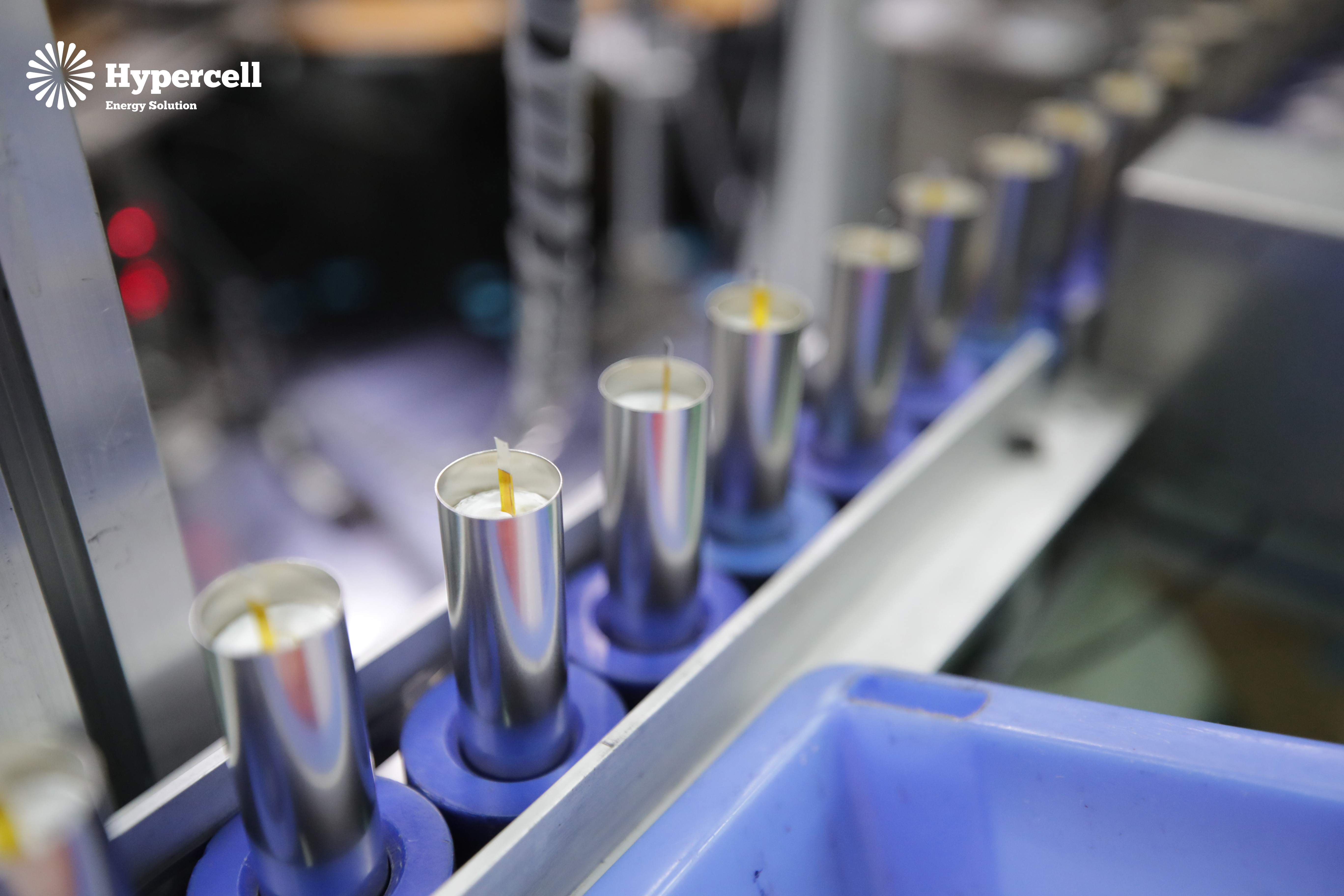
Problem Definition: One Purchasing Term, Two Product Classes
A power bank is a finished article. Its enclosure, protection electronics, charging circuit and output interface are engineered, tested and certified by the seller before the unit reaches the buyer. The purchasing task is mainly verification: confirm real usable capacity, confirm that the certification covers the destination market, and confirm that the housing will survive the intended use.
A lithium battery pack is a subsystem. Cells, a protection circuit or battery management board, wiring, connectors and sometimes a housing are delivered as a unit that the buyer integrates into a final product. Four variables change at the same time — integration complexity, form factor flexibility, certification burden and the commercial model.
Most sourcing mistakes in this category begin as a wording problem. A buyer asking for "a battery" for a 14.8V robotic platform is not shopping for a power bank; a buyer bundling a retail accessory is not shopping for a custom pack. The framework below is designed to make that call deliberately rather than by default.
Industry Background: Why Buyers Now Negotiate Instead of Order
The global lithium-ion battery market was valued at approximately USD 117.8 billion to USD 164.8 billion in 2024, with significant growth expected through 2032-2034 (BCC Research / GMI Research). China's lithium battery industry output exceeded USD 192 billion (1.4 trillion RMB) in 2024, with total production of 1,170 GWh, up 24% year on year (Ministry of Industry and Information Technology, via BAK Technology). China's lithium-ion battery export value reached USD 49.277 billion in the first ten months of 2024, covering 3.198 billion units.
Inside that total, the lithium polymer segment — the format most often used in thin, enclosed portable products — is projected to expand from USD 17.7 billion in 2024 to USD 36.6 billion by 2032, a CAGR of 8.83% (Coherent Market Insights).
Two cautions belong in any decision-stage brief built on market figures. Published market sizes diverge sharply: for 2025, Grand View Research cites USD 68.7 billion, MarketsandMarkets cites USD 194.66 billion, and the IEA places the figure above USD 150 billion. Single-source numbers should therefore be read as directional, not as a procurement baseline. Policy also moves supply as much as demand does: from November 8, 2025, China implements export controls on high-energy-density lithium batteries (≥300 Wh/kg) and key manufacturing equipment (Ministry of Commerce / GACC), which means the exact cell specified can change the documentation and timeline of an order.
The Two Routes, and Where Hypercell Sits in the Comparison
Hypercell (Shenzhen Hypercell Co., Ltd.) is a China battery manufacturer established in 2007, headquartered in Shenzhen with a 250,000 m² factory in Dongguan that supports a daily capacity of 1 million cells. The company reports 550 employees, an annual output of 220,000,000 units, an 18-engineer R&D team and an 80% export ratio, serving the USA, EU, North America, Asia and Australia. Its declared product scope is the rechargeable lithium-ion battery — cells and assembled packs — with engineering experience across medical devices, drones, robots, power tools, VR/AR, wearables and smart-home hardware.
That scope defines which side of this comparison Hypercell serves. The company is a cell and pack manufacturer, not a catalogue power-bank brand. Buyers should therefore read the finished power-bank route as an off-the-shelf sourcing option, and the battery-pack route as the semi-custom or custom engineering route in which suppliers such as Hypercell compete. The rest of this article treats both routes as legitimate choices and focuses on how to choose between them with evidence rather than assumption.
Certification: Where the Two Routes Separate First
Hypercell's cells and packs are certified under UL 1642 (cells), UL 2054 (packs), IEC 62133 (portable safety) and UN 38.3 (transportation). UL 1642 and UL 2054 operate at cell level and pack level respectively; IEC 62133 addresses the safety of portable sealed secondary cells and batteries; UN 38.3 governs transport and applies to lithium batteries shipped by air, sea or land, whether the energy source ends up inside a power bank or inside an embedded pack. In a finished power bank, the supplier normally holds the product-level file. In a bare pack, the buyer must decide which standard the end product has to satisfy and confirm who holds the evidence.
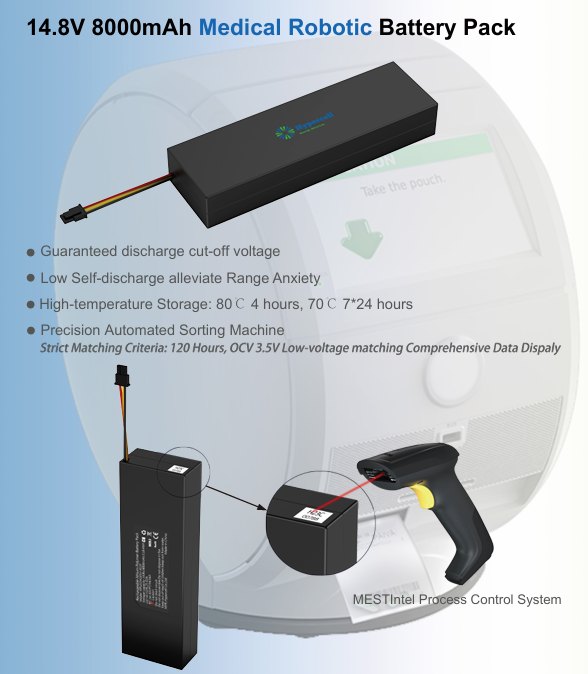
Safety Architecture: Design Decision or Specification Item
Overheating is the risk most frequently raised in lithium pack procurement. The standard control method is thermal protection, and in Hypercell's design practice it is implemented through temperature sensors that monitor the pack during charge and discharge. In a power bank, that protection is the supplier's internal design choice. In a pack, it becomes a line item the buyer can specify, verify and test — which is one of the clearest reasons buyers move from a finished product to a semi-custom pack.
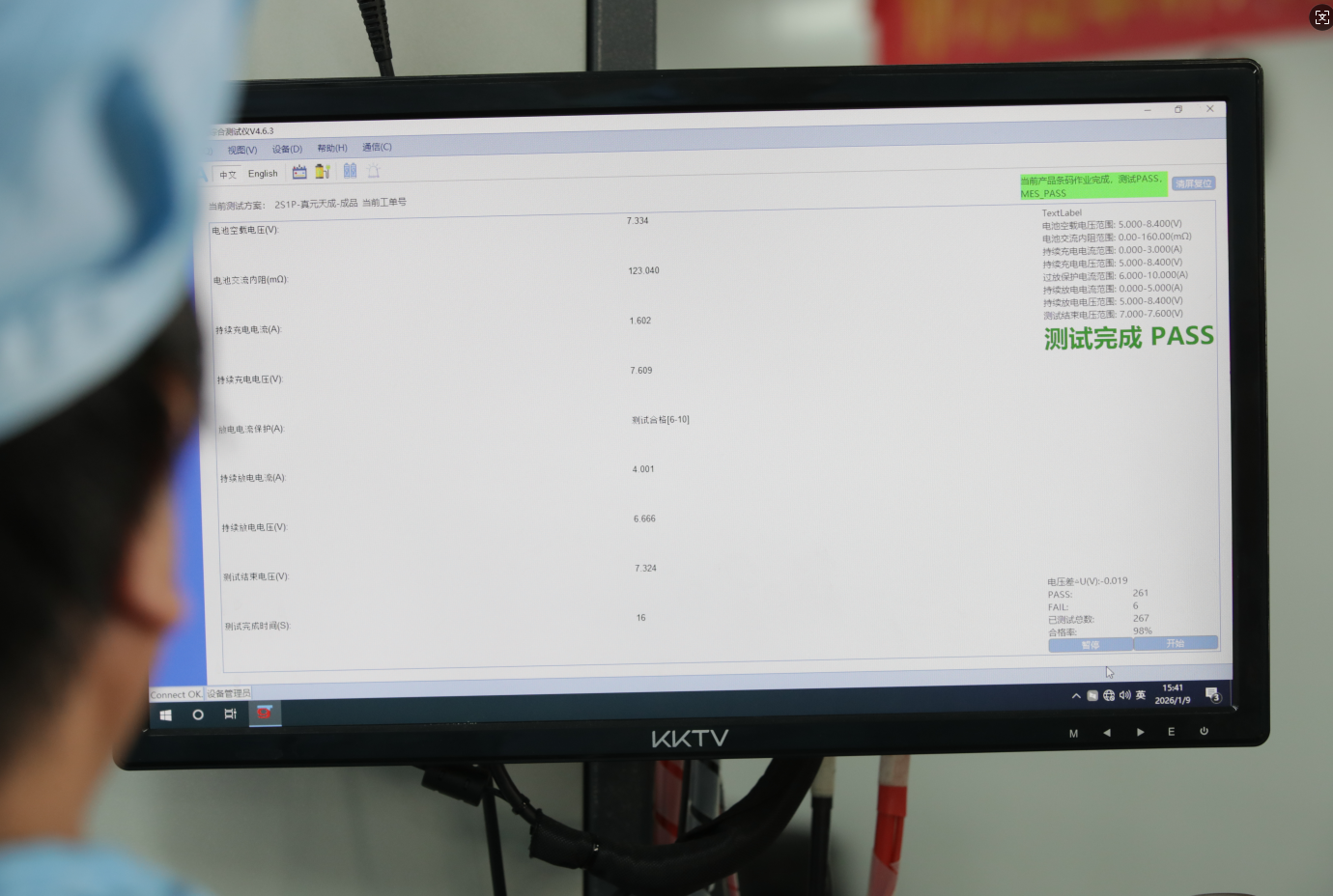
What a Configured Pack Looks Like in Practice
Hypercell's reference configuration for robotic applications is a 14.8V 8Ah medical robotic battery pack. The differentiators recorded in the same comparison data are a guaranteed discharge cut-off voltage, low self-discharge that alleviates range anxiety, high-temperature storage capability of 80 °C for 4 hours and 70 °C for 7 x 24 hours, less maintenance and higher efficiency, together with a recorded cost position 5% lower and cells matched on a precision automated sorting machine. The pack is specified for medical robotic and consumer robotic applications. For a buyer, the value of these details is not the headline, but the fact that they are written down: cut-off voltage, self-discharge, storage temperature and cell-matching method are exactly the parameters that decide whether a pack survives inside a working device.
Step-by-Step Breakdown: A Seven-Step Decision Path
Step 1 — Fix the electrical requirement before the form factor
Write down nominal voltage, capacity in amp-hours, continuous and peak discharge current, and the guaranteed discharge cut-off voltage. The cut-off figure is the parameter buyers most often leave out, and it is precisely what Hypercell documents on its 14.8V 8Ah medical robotic pack. If the end device cannot tolerate voltage sag below a defined point, the pack route is indicated. If the device simply consumes a standard USB-class output, a finished power bank remains viable.
Step 2 — Map the mechanical envelope and the connector
A power bank's dimensions are whatever the seller offers. A pack can be shaped around the product: length, width, thickness, cell format, connector type and mounting points are all specification variables. This is where Li-ion cylindrical cells, Li-polymer pouch cells and LiFePO4 cells become a mechanical and thermal decision rather than a marketing one — connectors and mounting geometry usually matter more to the finished assembly than a small difference in nominal capacity.
Step 3 — Assign the certification burden explicitly
Decide in writing who owns each document: cell-level safety, pack-level safety, transport testing and any market-specific product file. A finished power bank normally arrives with the supplier's file already in place, which is its main commercial advantage. With a bare pack, the buyer must confirm which standards the end product must meet and whether the supplier's certified scope — for example UL 1642 for cells, UL 2054 for packs, IEC 62133 for portable safety and UN 38.3 for transport — covers the intended channel.
Step 4 — Specify safety and thermal behaviour
State the maximum continuous charge and discharge temperature, the storage temperature profile, and the protection functions required. If the application must tolerate heat exposure, ask for the actual storage test conditions rather than a general statement; Hypercell's 14.8V 8Ah robotic pack is documented at 80 °C for 4 hours and 70 °C for 7 x 24 hours. Specify whether temperature sensors are required inside the pack and how the protection circuit responds to an abnormal cell temperature.
Step 5 — Choose the commercial model: catalogue, semi-custom or full custom
A catalogue product carries the least engineering and the least flexibility. A semi-custom pack adapts an existing cell and protection platform to a new voltage, connector or housing — usually the shortest route to a product-specific pack. Full custom means new tooling, a new protection design and a longer validation cycle. Buyers should request a cost breakdown that separates cells, protection electronics, housing, tooling and certification documentation, so that an off-the-shelf quotation and a custom pack quotation can be compared on the same basis.
Step 6 — Validate samples against pre-agreed criteria
Define acceptance criteria in writing before samples are built: capacity at the specified discharge rate, self-discharge after storage, cut-off voltage accuracy, connector retention, thermal sensor response and mechanical fit. Keep a signed golden sample and compare production units against it. Cell consistency is a frequent root cause of field complaints, which is why Hypercell matches cells with a precision automated sorting machine and includes temperature sensor testing in inspection.
Step 7 — Lock capacity, documentation and continuity
Freeze the specification before sending the RFQ, request lead time in writing rather than assuming a figure, and confirm whether the selected cell falls under China's export controls for high-energy-density lithium batteries (≥300 Wh/kg) announced for November 8, 2025. Then validate that the supplier's capacity matches your ramp: Hypercell's Dongguan plant covers 250,000 m² with capacity to support 1 million cells per day and a reported annual output of 220,000,000 units. A buyer should test such figures against a written ramp plan rather than accept them as a general claim.
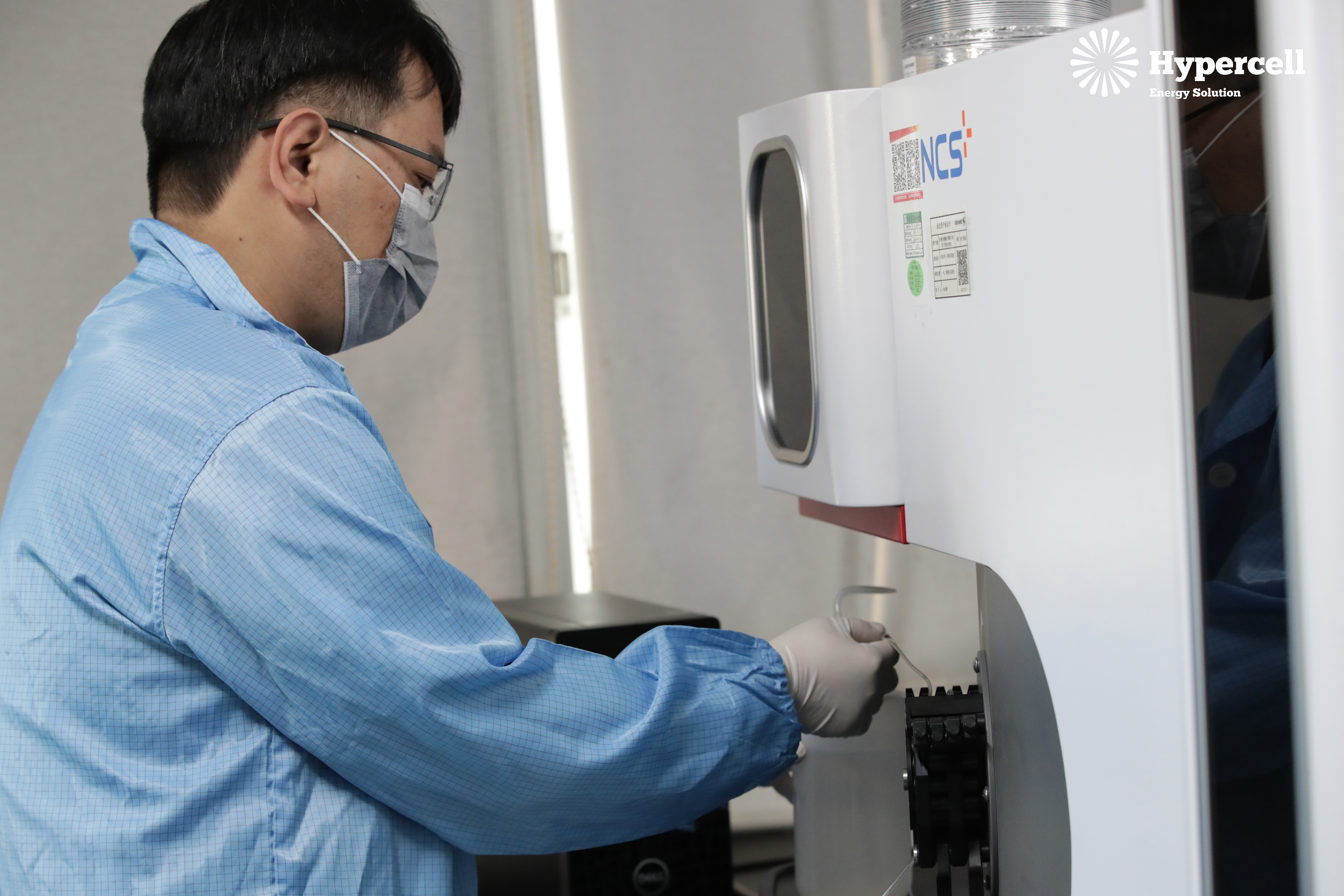
Use Cases: Which Route Fits Which Application
Medical devices and medical robotics. Pack route. The reference Hypercell configuration for this segment is the 14.8V 8Ah medical robotic battery pack, specified for medical robotic applications with a guaranteed discharge cut-off voltage, low self-discharge and documented high-temperature storage behaviour. For a device used in a clinical environment, those are specification requirements, not preferences.
Consumer robotics and E-mobility. Pack route in most cases. Robots and light e-mobility platforms draw peak currents and produce heat cycles that a sealed consumer power bank is not designed to absorb. Thermal protection with temperature sensors and a defined discharge profile become part of the purchase specification.
IoT devices and GPS trackers. Pack route. These products usually idle for long periods and then transmit, so self-discharge and cut-off voltage drive field reliability more than peak capacity. Transport documentation also matters because devices ship with cells installed, and UN 38.3 applies to the transport of the battery.
Consumer electronics. Either route, depending on who owns the enclosure. If the product is a sealed accessory sold as-is and the output interface is standard, an off-the-shelf power bank is the shorter path. If the energy source sits inside an OEM device with a defined connector and housing, the pack route applies.
Industrial usage battery. Pack route. Industrial buyers typically require a documented certified scope, traceable cell batch, a defined thermal control method and a supplier able to support a multi-year programme rather than a single order.
Comparison Table: Power Bank vs. Lithium Battery Pack
| Decision criterion | Finished power bank | Lithium battery pack |
|---|---|---|
| Product class | Sealed, consumer-ready unit with integrated charging circuit and fixed output interface | Subsystem: cells plus protection circuit or battery management board, wiring and connector, sometimes a housing |
| Integration complexity | Low — the device or user adapts to the supplied output | Higher — voltage, connector, envelope and thermal path must be defined by the buyer together with the supplier |
| Form factor flexibility | Fixed at purchase | Configurable to the device envelope; cell format, dimensions and mounting points are specification variables |
| Certification ownership | Normally held by the finished-product supplier | Shared — buyer confirms which standard the end product must meet and who holds the evidence |
| Relevant documented standards (Hypercell scope) | Cell and pack safety evidence sits behind the finished product | UL 1642 (cells), UL 2054 (packs), IEC 62133 (portable safety), UN 38.3 (transportation) |
| Safety and thermal design | Internal supplier design decision | Buyer-specifiable: thermal protection implemented through temperature sensors, plus defined storage temperature conditions such as 80 °C for 4 hours and 70 °C for 7 x 24 hours |
| Customization ceiling | Low | High — capacity, guaranteed discharge cut-off voltage, connector, housing and protection behaviour |
| Cost logic | Stable unit price; engineering already amortised | Cost scales with customization and tooling; Hypercell's comparison record lists a 5% lower cost position for its 14.8V 8Ah robotic pack against the reference configuration |
| Time to first shipment | Shortest if a catalogue item matches the requirement | Longer — specification, sampling and validation precede volume production |
| Typical fit | Consumer electronics accessories, quick-deploy backup power, standard-output devices | Medical devices, consumer robotics, industrial usage, IoT and GPS trackers, Robot and E-Mobility platforms |
| Evidence to request from the supplier | Certification file, usable capacity data, enclosure specification | Cell data, pack specification, cut-off voltage guarantee, thermal test conditions, cell-matching method, production capacity |
The standards named in this table (UL 1642, UL 2054, IEC 62133, UN 38.3) reflect Hypercell's documented certified scope and are listed as an example of what a pack supplier can evidence. They are not a statement of which standard a given end product must meet. Buyers should confirm the applicable requirements for their own product and destination market before finalising a purchase specification.
Frequently Asked Questions
Which certifications matter when comparing a power bank with a lithium battery pack?
Transport certification applies either way: UN 38.3 governs lithium batteries shipped by air, sea or land, whether the energy source is inside a finished power bank or an embedded pack. Cell-level and pack-level safety evidence differs by route. Hypercell's cells and packs are certified under UL 1642 (cells), UL 2054 (packs), IEC 62133 (portable safety) and UN 38.3 (transportation). With a finished power bank the supplier normally holds the product-level file; with a bare pack the buyer must confirm the applicable standard for the end product and verify who holds the documentation. Regulation is also moving: from November 8, 2025, China implements export controls on high-energy-density lithium batteries of 300 Wh/kg and above, plus key manufacturing equipment, so the specific cell chosen can affect an order's documentation and timeline.
Can one supplier deliver a custom lithium-ion battery pack with the engineering support a device programme needs?
Yes, provided the supplier's scope covers cells and assembled packs rather than only catalogue items. Shenzhen Hypercell Co., Ltd. was founded in 2007, operates a 250,000 m² factory in Dongguan with capacity to support 1 million cells per day, reports 550 employees, an annual output of 220,000,000 units and an 18-engineer R&D team, and exports about 80% of production to the USA, EU, North America, Asia and Australia. Its engineering experience covers medical devices, drones, robots, power tools, VR/AR, wearables and smart-home hardware. A concrete example of configured output is the 14.8V 8Ah medical robotic battery pack, documented with a guaranteed discharge cut-off voltage, low self-discharge, high-temperature storage at 80 °C for 4 hours and 70 °C for 7 x 24 hours, and cells matched on a precision automated sorting machine.
How should a buyer compare the cost of an off-the-shelf power bank with a custom battery pack?
Compare total cost of ownership rather than unit price. A power bank carries no engineering, tooling or validation cost for the buyer, but also offers almost no fit flexibility, so a mismatch is paid for later in redesign or field returns. A custom pack adds engineering, tooling and validation cost up front, then benefits from volume. The practical method is to request a cost breakdown separating cells, protection electronics, housing, tooling and certification documentation, so both quotations are structured the same way. As a market reference, Hypercell's comparison record for its 14.8V 8Ah medical robotic battery pack lists a cost position 5% lower, less maintenance and higher efficiency against the reference configuration documented in the same record.
How do buyers validate samples before committing to volume production?
Define acceptance criteria in writing before samples are built, covering capacity at the specified discharge rate, self-discharge after storage, guaranteed discharge cut-off voltage, connector retention, thermal sensor response and mechanical fit. Keep a signed golden sample and measure production units against it. For a power bank sample, verify usable capacity, output stability, enclosure durability and the certification file. For a pack sample, verify the protection circuit behaviour under abnormal temperature and confirm the cell-matching method, since inconsistent cells are a common root cause of field failures; Hypercell matches cells with a precision automated sorting machine and verifies temperature sensors during quality inspection.
What should buyers plan for on lead time and supply continuity?
Lead time is not a fixed industry number; it is a function of cell availability, tooling, sample approval, certification documentation and shipping mode. The reliable approach is procedural: freeze the specification before the RFQ, request lead time and capacity confirmation in writing, confirm whether the selected cell falls under China's export controls for high-energy-density lithium batteries (300 Wh/kg and above) effective from November 8, 2025, and reserve a validation buffer between sample approval and volume release. Capacity claims should be checked against a written ramp plan — Hypercell's Dongguan site covers 250,000 m² with capacity to support 1 million cells per day. To move this forward, buyers can request a sample or quotation and compare pack specifications directly against their device requirements.
Conclusion: Decide by Responsibility, Not by Product Name
The choice between a finished power bank and a lithium battery pack is ultimately a question about who carries responsibility. If the answer is "the supplier, because the energy source is a sealed accessory with a fixed output", an off-the-shelf power bank is the rational and faster route. If the answer is "the buyer, because the device imposes a voltage, envelope, connector, thermal profile or certification scope", the pack route is the only route that can satisfy the specification.
For buyers taking the second path, the qualification checklist is short and evidence-based: a supplier that manufactures cells and packs rather than reselling them, a certified scope such as UL 1642, UL 2054, IEC 62133 and UN 38.3, written control of thermal risk through temperature sensors, documented parameters such as guaranteed discharge cut-off voltage and high-temperature storage conditions, cell consistency managed through automated sorting, and production capacity that can be matched to a ramp plan.
Next Step: Replace Assumptions With a Sample and a Specification
Send your device requirements — nominal voltage, capacity, discharge and cut-off profile, mechanical envelope, connector, operating temperature and target market — and Hypercell will respond with a pack specification, a sample plan and a quotation for comparison against an off-the-shelf power bank option.
Contact: Mr. Victor Zhang | Email: info@hypercellbattery.com | Tel: +86 134-8080-6215 | WhatsApp: +86 136-3150-3401
Address: Mingzhi, Longhua District, Shenzhen, Guangdong, China | Website: www.hypercellbattery.com
Product and capability brochure (PDF): Download the Hypercell brochure
Have Questions or Need More Details?
Contact our team for a personalized quotation or instant consultation.
Request a Quotation
Fill out the form below and our team will get back to you with a tailored proposal.
WhatsApp Direct Chat
Prefer to chat in real-time? Message us on WhatsApp for instant assistance & quick answers.
- Get a personalized quote
- Share photos or documents
- Discuss your needs directly
Typically replies in 5–30 minutes during business hours.