
What Is a Lithium-Ion Battery? A Technical Guide to Core Parameters and Selection
A lithium-ion battery is a rechargeable battery that stores and releases electrical energy by moving lithium ions between a positive electrode and a negative electrode through an electrolyte. Nothing in that definition mentions price, size or brand, and that is precisely why first-time buyers get stuck: the same physical principle describes a pocket power bank and a 46.8V industrial pack, yet their specification sheets look nothing alike.
This guide is written for engineers and procurement staff who are about to source lithium batteries from a China battery manufacturer such as Hypercell (Shenzhen Hypercell Co., Ltd.). It explains how a lithium-ion battery works, walks through the parameters buyers actually compare, capacity, voltage, cell format, cycle life and application fit, and finishes by showing how those parameters turn into purchasing terms and acceptance criteria in an order.
What Is a Lithium-Ion Battery? The Working Principle in Plain Terms
Every lithium-ion cell contains four functional parts:
- Cathode (positive electrode) – a lithium metal oxide compound that releases lithium ions during discharge.
- Anode (negative electrode) – typically graphite, which stores lithium ions while the battery is charging.
- Separator – a porous membrane that keeps the electrodes apart while allowing ions to pass.
- Electrolyte – the medium that carries lithium ions between the two electrodes.
During charging, an external voltage drives lithium ions out of the cathode and into the anode, where they are held. During discharge, the process reverses: ions travel back to the cathode and the connected device draws current from the external circuit. Lithium is never present in metallic form inside a lithium-ion cell, which is what separates it from a lithium metal battery.
A single cell offers limited voltage and capacity, so cells are connected in series (S) to increase voltage and in parallel (P) to increase capacity. That is why pack names read like codes. The INR18650-4S2P pack contains four cells in series and two in parallel; a 4S8P pack of the same family contains thirty-two cells in a 12.8V configuration; a 13S1P pack uses thirteen cells in one parallel string.
A finished battery pack adds three layers on top of the cells: a battery management system (BMS) that monitors and protects the pack, an enclosure that provides mechanical and environmental protection, and a connector that mates with the host device. When a buyer places an order for a lithium-ion battery, they are ordering this complete assembly, not bare cells.
Why Battery Specifications Are Hard to Read the First Time You Source
The difficulty is rarely chemical. It comes from inconsistent presentation.
- Capacity quoted without voltage. 4000mAh sounds substantial, but it represents a different amount of energy at 3.6V than at 12.8V. Only watt-hours (Wh) allow two batteries to be compared directly.
- Cycle life quoted without test conditions. 500 cycles and 3000 cycles are not automatically different quality levels; the figures depend on the charge and discharge rate and the temperature used in the test.
- Current limits written in three notations. One datasheet states 6.0A, another 10,000mA, another 0.5C. All three describe the same type of limit.
- One label, many products. A power bank and an AGV battery are both sold as lithium batteries, but they are specified for completely different duty cycles.
The commercial consequence is real. Buyers end up comparing quotations built on different assumptions and then negotiate on price instead of on specification. Over-specifying raises unit cost, while under-specifying produces field failures that no warranty fully repairs. The parameter set below gives both sides a common language.
Industry Background: What a China Battery Manufacturer Brings to a Sourcing Project
China is the largest single production base for lithium-ion batteries and a major exporter of finished cells and packs. For a buyer, the significance is structural rather than geographic: a manufacturer that builds both cells and packs can combine standard cylindrical cells, lithium iron phosphate cells and lithium polymer cells under one quality system, so a single supplier can serve a consumer electronics line, a medical device platform and an industrial robot programme.
Hypercell, founded in 2007 and headquartered in Shenzhen, follows that structure. Its manufacturing site in Dongguan covers 250,000 m² and produces 220,000,000 units per year with a workforce of 550 people. The company operates an 18-engineer R&D team and exports roughly 80% of its output to the USA, EU, North America, Asia and Australia, working with consumer electronics, medical device, robotics, drone, power tool, wearable and smart home products.
Two consequences matter to a first-time buyer. First, chemistry and format options are usually available from one supplier, so the pack can be matched to the application instead of the application being bent around the pack. Second, customisation is a standard production mode rather than a special favour: Hypercell builds packs on ODM/OEM terms, and the pack specifications quoted in this article are examples of that capability rather than a fixed catalogue.
Core Parameters Buyers Actually Compare
Nine parameters decide whether a lithium-ion pack fits an application. Each is explained below with a real Hypercell build, so the abstract number has something concrete attached to it.
1. Cell chemistry and format
Three families cover most sourcing projects.
- Li-ion cylindrical cells – standardised metal-can cells such as the INR18650 and INR21700 formats. They are mechanically robust, straightforward to combine into series and parallel strings, and widely used in instruments, robotics and industrial equipment.
- LiFePO4 (lithium iron phosphate) – the IFR family. It delivers a lower nominal voltage per cell but a substantially longer cycle life, which suits equipment that must run through many charge cycles.
- Li-polymer cells – flat, shape-flexible cells used where thickness and form factor dominate, as in portable consumer products.
The selection rule is simple: choose the chemistry by duty cycle and available space first, then work out the pack configuration.
2. Capacity (mAh / Ah) and energy (Wh)
Capacity describes how much charge a battery can deliver; energy describes how much work it can do. Energy is the comparable figure.
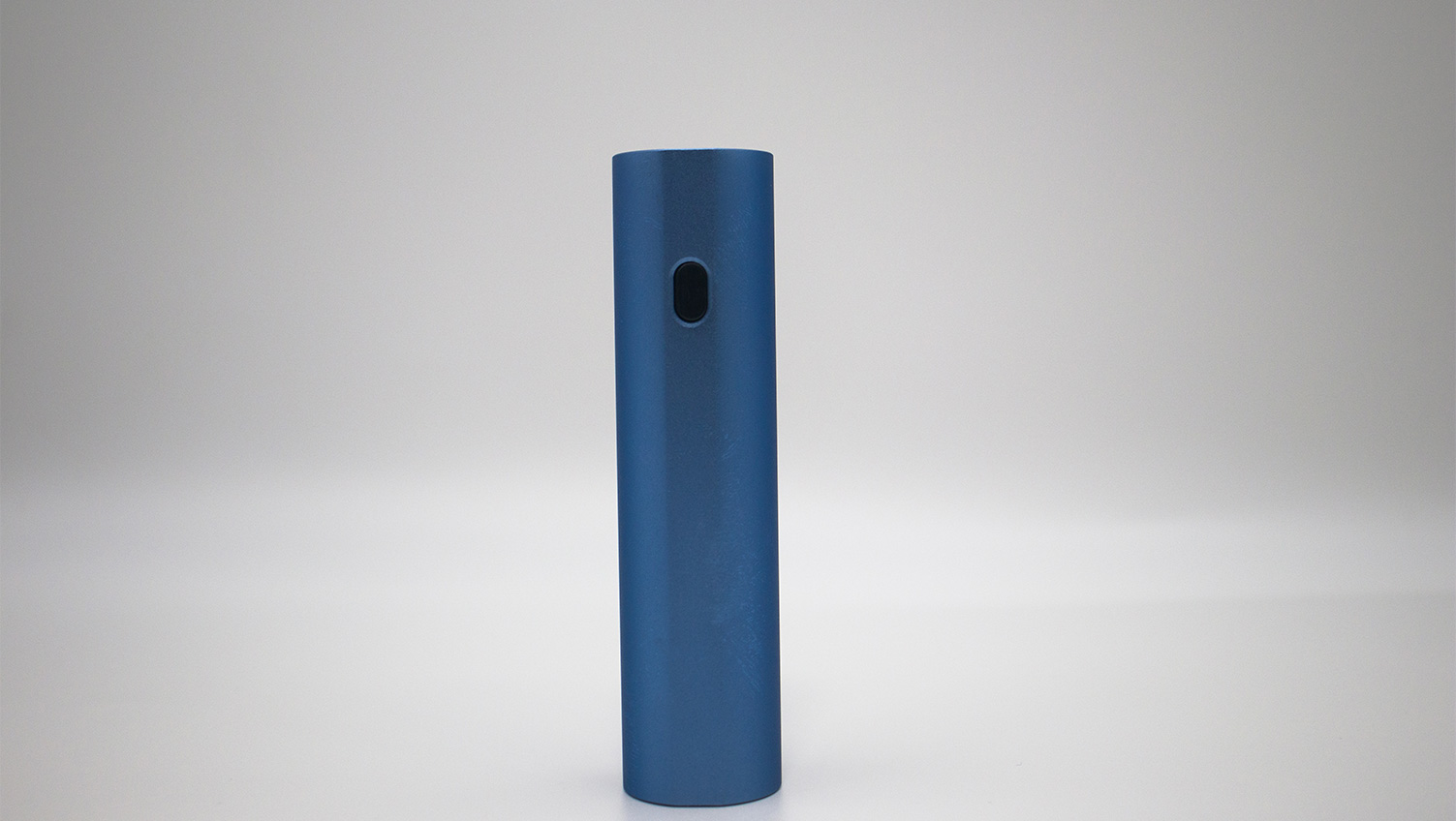
- Power bank HPC B1: 3.6V / 4000mAh, rated 14.4Wh.
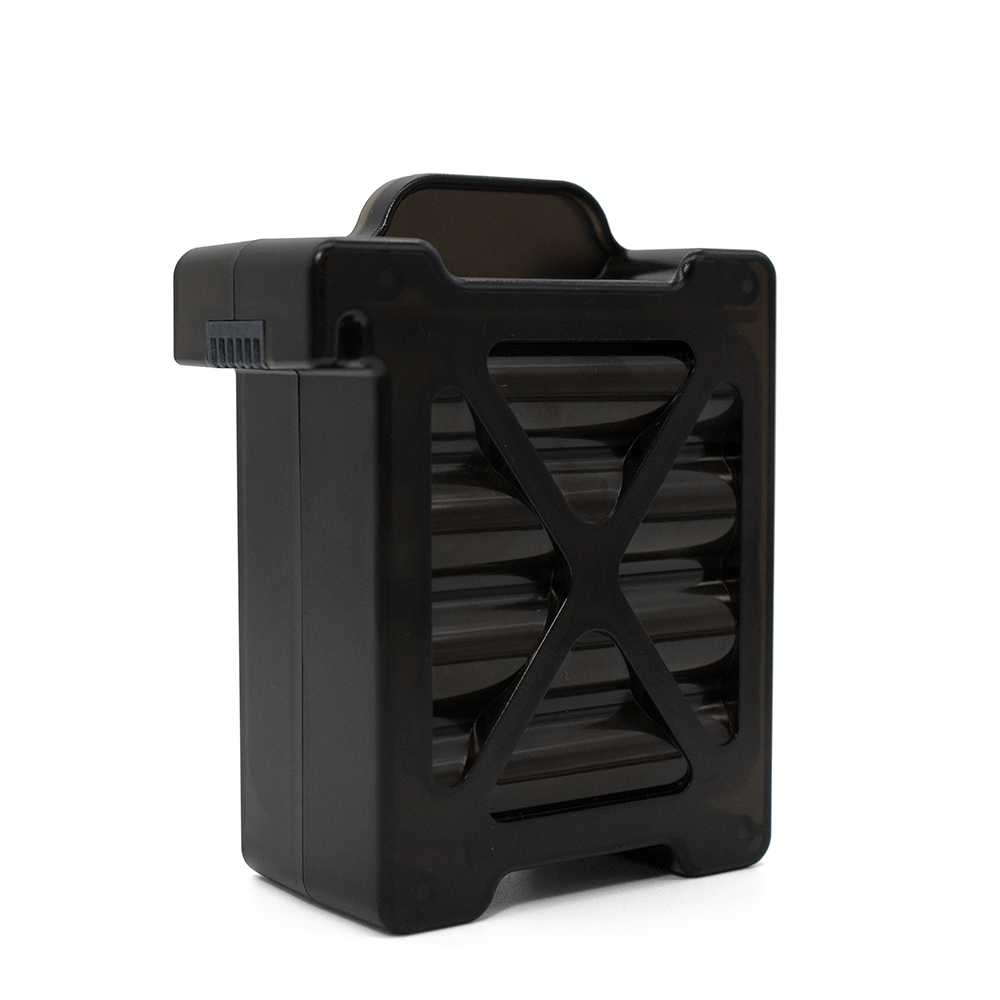
- INR18650-4S2P pack: 14.4V / 6700mAh, 96.48Wh.
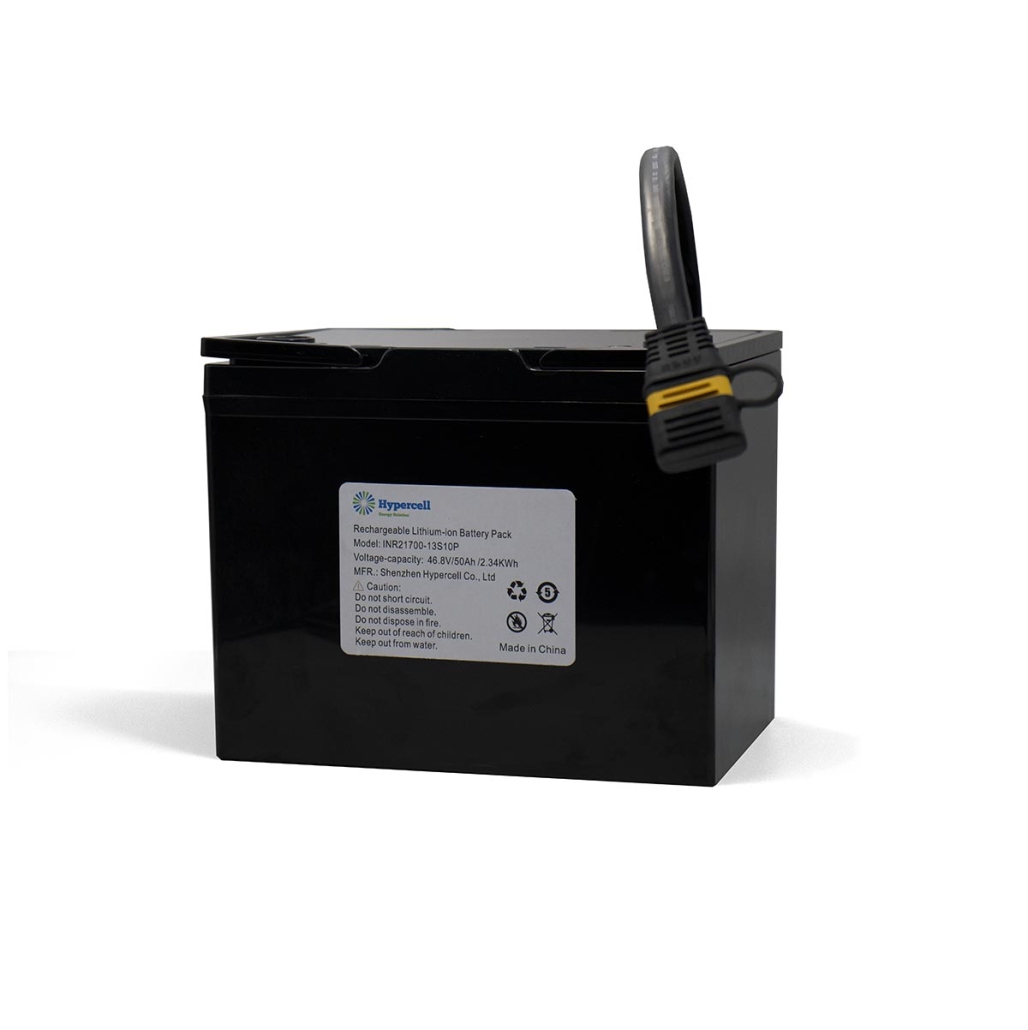
- INR21700-13S1P pack: 46.8V / 4900mAh minimum (5000mAh typical), 234Wh.
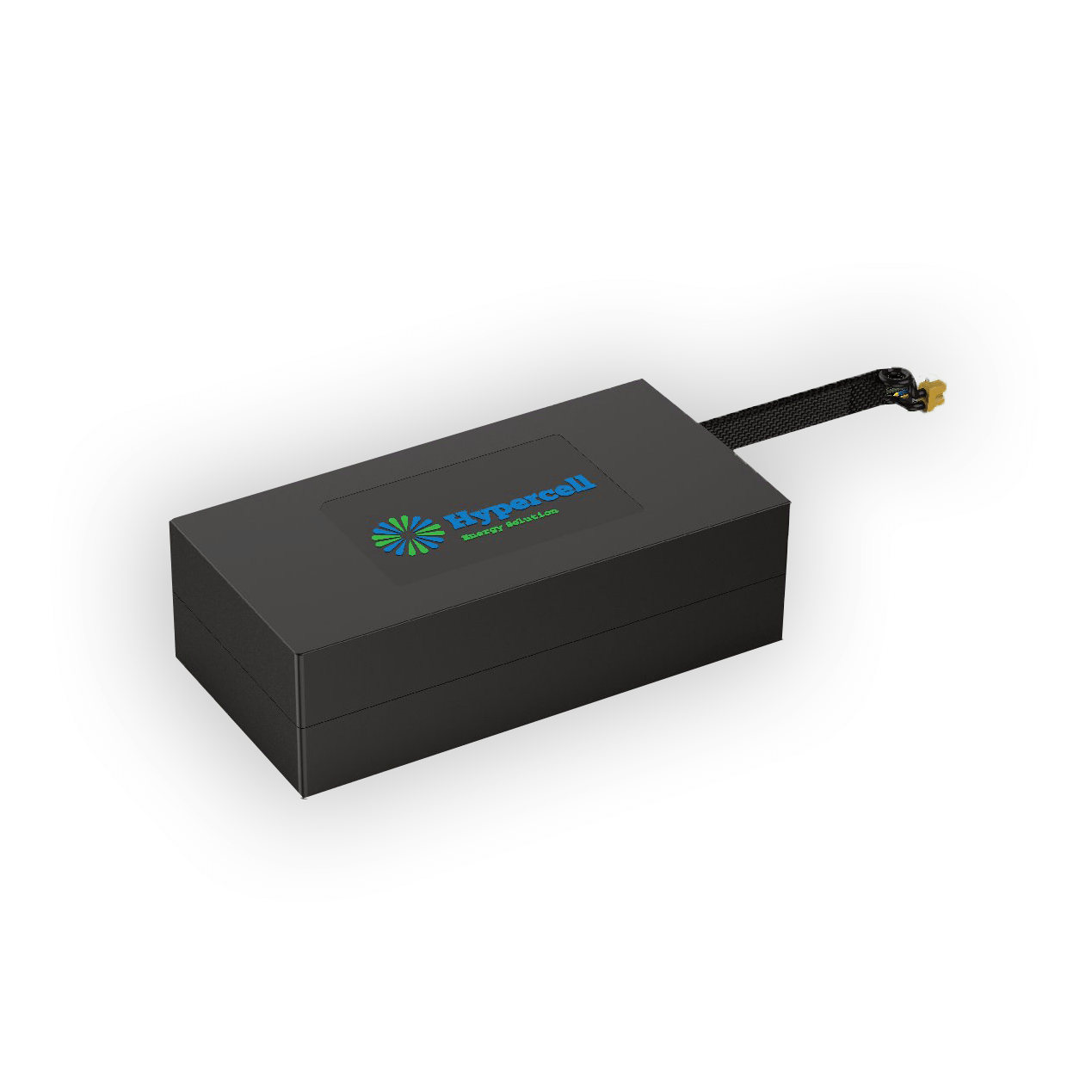
- IFR3140 4S8P pack: 12.8V / 120Ah, 1536Wh.
The last two rows make the point. A 6700mAh pack holds less total energy than a 4900mAh pack, because the second pack operates at a far higher voltage. Always ask the supplier for watt-hours before comparing two quotes.
3. Nominal voltage and series/parallel configuration
Pack voltage is the cell voltage multiplied by the number of series cells, and capacity is multiplied by the number of parallel strings. The Hypercell builds above illustrate it: 4S2P produces 14.4V / 6700mAh, 4S8P produces 12.8V / 120Ah from LiFePO4 cells, and 13S1P produces 46.8V from 21700 cells.
Charge and discharge voltage limits must also be fixed. A 14.4V pack charges to a maximum of 16.8V, a 12.8V LiFePO4 pack to 14.6V, and a 46.8V pack to 54.6V. The discharge end is equally important: 10.0V (2.50V per cell) for the two 4S packs, and a recommended discharge cut-off of 32.5V for the 46.8V pack.
4. Charge and discharge current limits
Current defines what the equipment can actually run. Limits are often written as a C-rate, where 1C equals the rated capacity in amperes.
- IFR3140 pack: fast charge current 0.2C at 25°C; maximum continuous discharge 5A at 25°C.
- INR18650-4S2P pack: fast charge current 0.5C at 25°C; maximum continuous discharge 6.0A at 25°C.
- INR21700-13S1P pack: maximum continuous charge 5000mA; maximum continuous discharge 10,000mA; internal impedance below 200mΩ; recommended charge cut-off at 100mA or 3.0 hours.
Note the temperature qualifier. Current capability falls as the pack warms up, so a limit quoted at 25°C is not automatically valid inside a sealed enclosure or in direct sunlight.
5. Cycle life, read together with its test condition
Cycle life states how many charge and discharge cycles a pack completes before capacity drops below a set percentage of its original value. The number means nothing without the conditions attached to it.
- INR18650-4S2P: 500 cycles to ≥80% of rated capacity at 0.5C.
- INR21700-13S1P: 800 cycles to >80% of initial capacity at 1C and 20°C.
- IFR3140 4S8P LiFePO4: 3000 cycles to ≥80% of rated capacity at 0.2C.
The LiFePO4 pack is tested at a lower C-rate and reaches a much higher cycle count, which is exactly why chemistry should follow the expected service life of the device. A consumer power bank may see only a few hundred partial cycles, while industrial equipment running 24/7 will exhaust its cycle budget far sooner.
6. Operating temperature window
Both the INR18650-4S2P pack and the IFR3140 pack are specified for charging between 0°C and 45°C and discharging between -20°C and 60°C. The AGV project recorded in Hypercell's application data uses a charging range of 0°C to 50°C and a discharging range of -20°C to 60°C for a 48V pack in continuous operation. Charging below 0°C sits outside these windows, so outdoor equipment used in winter needs a charging strategy, not simply a larger battery.
7. BMS and protection functions
The BMS is the difference between a string of cells and a safe product. Hypercell pack specifications list dual protection covering over-voltage (OV), under-voltage (UV), over-current (OC), over-temperature (OT), under-temperature (UT) and short-circuit current (SCC), and explicitly prohibit charging a 0V battery.
Communication is a separate decision. The IFR3140 4S8P pack and the INR21700-13S1P pack both include CAN 2.0, and the IFR pack also specifies 45A short-circuit protection. If the host system needs state-of-charge or fault data, that requirement has to be stated at quotation stage rather than added after tooling.
8. Enclosure, ingress protection and connector
Mechanical protection is often the parameter that determines whether a pack survives its environment.
- INR18650-4S2P: PC+ABS enclosure, UL94-V0 rated, IP68 protected, fitted with a 6-pin blade connector.
- INR21700-13S1P: IP65 waterproof ABS+PC enclosure.
- Power bank HPC B1: Type-C input and USB-A output at 5V1.2A.
Connector choice is easy to overlook and expensive to change later. Define the mating connector before tooling is released.
9. Mechanical dimensions and tolerances
Finally, confirm the physical envelope. The INR18650-4S2P pack measures 82.0 x 42.0 x 105.0 mm with a tolerance of ±0.2 mm, while the LiFePO4 12.8V 120Ah pack is a cylinder of Ø169 ±1.0 mm by 300.0 ±3.0 mm. These tolerances belong on the drawing that accompanies the purchase order.
Step-by-Step Breakdown: From Parameter List to Signed Order
The sequence below converts a technical requirement into terms that both the supplier and the buyer can be held to.
- Define the duty cycle. State how the device is used: continuous 24/7 operation as in an AGV, standby-heavy behaviour in an IoT device, intermittent use in a medical product, or occasional use in a consumer power bank.
- Translate usage into electrical requirements. Derive the nominal voltage, the continuous discharge current, the energy needed between charges and the peak current for start-up or transmission bursts.
- Select chemistry and cell format. Match LiFePO4, cylindrical Li-ion or Li-polymer to the cycle life, temperature and space requirements identified in step one.
- Fix the physical envelope. Dimensions, enclosure material, ingress protection, connector type and cable routing.
- Agree the test conditions behind every claim. Record the C-rate, temperature and cut-off used for each parameter. This single step turns a marketing figure into an acceptance criterion.
- Confirm the manufacturing terms. Hypercell builds customised lithium-ion packs on ODM/OEM terms with a monthly capacity of 90,000 units, a minimum order quantity of 1000 units and a lead time of 35 to 40 days, with 100% testing of production units.
- Write acceptance criteria into the purchase order. List the parameters that will be measured, the tolerance allowed, the documentation that must accompany each shipment and the agreed response if a batch falls outside tolerance.
- Validate with a sample, then release mass production. Sampling confirms that the agreed parameters survive real assembly, and the 12-month warranty covers the production phase that follows.
Use Cases: The Same Parameters, Different Priorities
Consumer electronics and power banks
For a product such as the HPC B1 power bank, the decisive parameters are energy per unit of volume, input and output interfaces, and safe behaviour in a pocket. Cycle life expectations are moderate and cost sensitivity is high, which is why Li-polymer or cylindrical Li-ion cells in a sealed enclosure usually win here. Hypercell lists this pack for medical and consumer applications.
IoT devices and GPS trackers
IoT hardware and GPS trackers invert the priorities. The pack may be small, but it must hold charge for long standby periods, survive wide temperature swings and last through years of intermittent transmission. Continuous current demand is modest, so the BMS is specified for protection behaviour and low quiescent consumption rather than for high load capability.
Medical devices
Medical equipment adds traceability on top of electrical performance. Packs must be consistent from unit to unit, because a device validated with one pack must behave identically with the next. The HPC B1 power bank, specified for medical and consumer use, shows how one pack platform can serve a regulated and a non-regulated product when the specification is fixed early and repeated accurately in production.
Industrial equipment, AGV and robotics
Industrial usage is where the parameter set expands. A 48V pack built on INR21700 cells with a CAN 2.0 BMS and an IP65 enclosure is designed for equipment such as AGVs and robots operating continuously across charging temperatures of 0°C to 50°C and discharging temperatures of -20°C to 60°C. Applications of this type also appear in automated machinery, drones, off-grid energy storage and portable power systems. Here, continuous discharge current, communication and cycle life generally outweigh the price difference between chemistries.
Automotive and other long-life programmes
Long-life programmes show why cycle life and stability must be specified together. Hypercell supplied 1000 units to an automotive OEM customer operating across Germany, the United States, Canada, France, Italy, Korea, Japan, Mexico and Australia; the 51.6V 100Ah battery pack has remained in stable operation for five years, with safety, long cycle life and stability identified as the key requirements. Programmes of this length are won on the test conditions agreed at the start, not on the headline capacity printed on the first page.
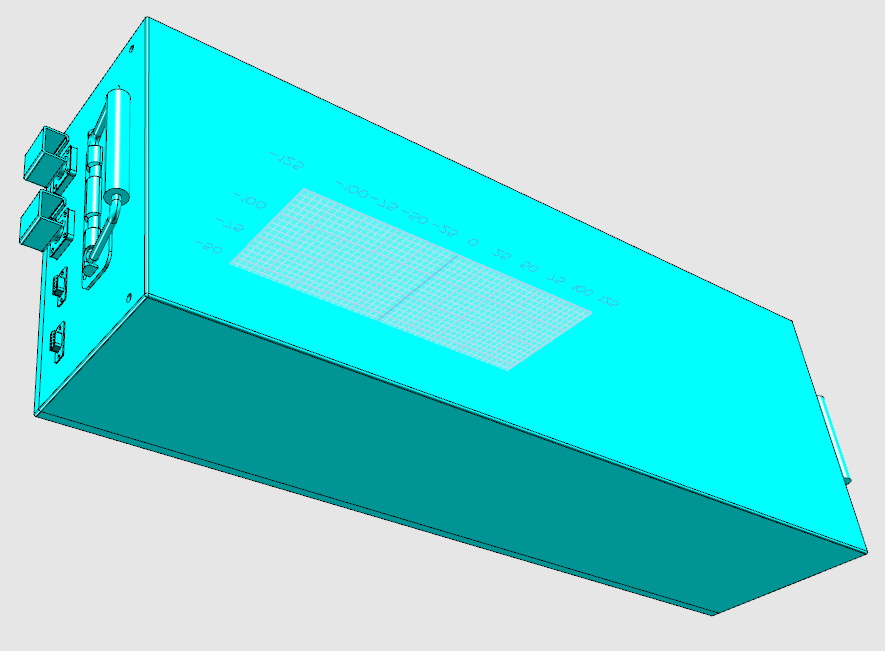
Comparison Table: Chemistry and Format Options at a Glance
| Pack example | Chemistry & format | Nominal voltage / capacity | Energy | Cycle life as specified | Housing | Best-fit applications |
|---|---|---|---|---|---|---|
| Power bank HPC B1 | Li-ion (INR) portable pack | 3.6V / 4000mAh | 14.4Wh | Not stated on this specification | Sealed portable housing; Type-C in, USB-A out 5V1.2A | Consumer electronics, portable power, medical and consumer devices |
| INR18650-4S2P | Li-ion cylindrical (INR18650) | 14.4V / 6700mAh | 96.48Wh | 500 cycles ≥80% at 0.5C | PC+ABS, UL94-V0, IP68, 6-pin blade connector | Instruments, marine electronics, medical and industrial devices |
| INR21700-13S1P | Li-ion cylindrical (INR21700) | 46.8V / 4900mAh min. (5000mAh typical) | 234Wh | 800 cycles >80% at 1C, 20°C | IP65 waterproof ABS+PC, CAN 2.0 BMS | AGV, robotics, e-mobility, industrial machinery, off-grid storage |
| IFR3140 4S8P | LiFePO4 (IFR3140) | 12.8V / 120Ah | 1536Wh | 3000 cycles ≥80% at 0.2C | Cylinder Ø169 x 300 mm, CAN 2.0, 45A SCP | Long-cycle industrial equipment, hydrophone-type systems, energy storage |
Cycle-life figures in the table are quoted together with the conditions stated on the pack specification. They are not comparable across rows unless the test conditions are equivalent, and a supplier should always be asked to restate them for the exact load profile of your device.
Frequently Asked Questions
1. What documents and compliance evidence should a buyer request from a lithium battery supplier?
Compliance questions fall into three layers: safety documentation for the cell, test evidence for the assembled and finished pack, and transport classification documents for shipping the battery. Which documents apply depends on your destination market, the end product category and the mode of transport, so the practical method is to list your destination countries and intended use first, and then ask the supplier to confirm which documents apply to that specific configuration. One rule matters more than the list itself: documents must be issued for the exact pack you order, not for a similar model in the same family. Buyers should raise this at quotation stage, because retrofitting documentation after an order is confirmed is far slower than fixing it in the specification.
2. Can a China battery manufacturer build a custom lithium-ion pack for my device?
Yes. Customisation is a normal production mode rather than an exception. Hypercell builds customised lithium-ion battery packs on ODM/OEM terms, with a monthly capacity of 90,000 units and an annual output of 220,000,000 units from a 250,000 m² factory in Dongguan, supported by an 18-engineer R&D team. Within that capability, customisation typically covers the chemistry and cell format (cylindrical INR cells, IFR LiFePO4 cells or Li-polymer cells), the series and parallel configuration that sets voltage and capacity, the BMS protection set, communication such as CAN 2.0, enclosure material and ingress protection, and the connector type. The more of these variables you can fix before requesting a quotation, the more precisely the quotation can be compared with competing offers.
3. What drives the cost of a custom lithium-ion battery pack?
Cost follows the specification rather than a catalogue price, and the drivers are visible in the parameters themselves. The main ones are the cell chemistry and format, the energy in watt-hours because it determines how many cells are needed, the required continuous discharge current, the BMS protection and communication functions, the enclosure material and ingress protection rating, the connector type, the extent of testing and documentation, and the ordered quantity relative to the minimum order quantity, which is 1000 units for customised lithium-ion packs. To see how specification changes cost, compare two packs of similar energy where one carries a sealed IP68 PC+ABS enclosure and a locking blade connector and the other is an open-frame assembly: the sealing, materials and connector work are different, and the quotations should be compared on identical parameter sets rather than on a single unit price.
4. How does sampling and validation work before mass production?
Sampling follows parameter agreement, in this order: define the electrical, mechanical and environmental requirements; have the sample built to those requirements; validate the sample against the acceptance criteria; then release the production order. Validation should test the same parameters the contract will measure, including nominal voltage and capacity at the agreed C-rate, continuous discharge current under real load, charge and discharge cut-off behaviour, enclosure dimensions and connector fit, and the response of the BMS protection functions. Performing these checks on the sample is what converts a datasheet into a specification that can be enforced later, and it is also the point at which the 12-month warranty terms should be confirmed in writing.
5. What is the lead time for a customised lithium-ion pack, and how should I plan it?
Hypercell states a lead time of 35 to 40 days for customised lithium-ion packs, with a monthly production capacity of 90,000 units and 100% testing of production units before shipment. When planning, add the sample validation period ahead of that window, and align the order quantity with the minimum order quantity of 1000 units so the schedule is not reset late in the project. If you want to check the lead time against your own programme, the fastest route is to send your voltage, capacity, continuous current, dimensions and target application to the Hypercell team through info@hypercellbattery.com or download the product brochure below and review the standard configurations first.
Conclusion: From Technical Definition to Purchasing Discipline
A lithium-ion battery is straightforward to define and difficult to buy well. The chemistry moves lithium ions between two electrodes; the pack adds a BMS, an enclosure and a connector; and everything a buyer cares about, capacity, voltage, current, cycle life, temperature and mechanical fit, is simply a way of describing how those parts behave under a specific load.
The working pattern that makes sourcing predictable has four steps. Translate the duty cycle into electrical requirements. Choose chemistry and cell format for the cycle life and environment the product will actually see. Fix the mechanical envelope, enclosure, ingress protection and connector before tooling. Then agree the test conditions behind every claim, and carry those conditions into the purchase order as acceptance criteria alongside the manufacturing terms, the order quantity and the warranty.
Buyers who follow that sequence stop comparing quotations by price and start comparing them by specification, which is the only comparison that predicts how a pack will behave once it is inside the product.
Ready to specify your lithium-ion pack?
Send your nominal voltage, capacity, continuous discharge current, dimensions and target application, and the Hypercell engineering team will confirm which parameters need to be fixed before quotation. Custom packs are built on ODM/OEM terms with a minimum order quantity of 1000 units and a 12-month warranty.
📧 info@hypercellbattery.com | WhatsApp: +86 136-3150-3401 | Tel: +86 134-8080-6215
📄 Download the Hypercell product brochure | www.hypercellbattery.com
Have Questions or Need More Details?
Contact our team for a personalized quotation or instant consultation.
Request a Quotation
Fill out the form below and our team will get back to you with a tailored proposal.
WhatsApp Direct Chat
Prefer to chat in real-time? Message us on WhatsApp for instant assistance & quick answers.
- Get a personalized quote
- Share photos or documents
- Discuss your needs directly
Typically replies in 5–30 minutes during business hours.