
Cut Costs, Not Quality: How Smart Buyers Control Procurement Costs at a Battery Assembling Factory
Procurement teams in every industry want the same thing from a battery supply chain: reliable performance at a defensible price. Yet when the component is a customized Li-ion battery, the cost conversation becomes more complicated. A battery assembling factory can produce packs that look similar but contain very different levels of internal quality. The lowest quote may rely on lower-grade cells, weaker protection circuits, or less testing. Buyers who accept that quote often discover that the real cost arrives later — in return rates, field failures, delayed shipments, or lost end-user trust. The question is not whether to control costs, but how to do it without compromising the quality of the final product.
There is a practical route. Cost control at a battery assembling factory can be achieved by matching the specification to the real application, qualifying the factory through verifiable certifications, using production capacity to gain scale efficiency, and evaluating total cost of ownership instead of the supplier's unit price. This article translates those principles into a sourcing framework for global buyers. It also uses Shenzhen Hypercell Co., Ltd., a custom Li-ion battery manufacturer founded in 2007, as a working example of what a quality-first battery assembly partner looks like.
The Hidden Cost of a Low-Price Battery Assembling Factory
Low-price battery sourcing looks easy on paper. The unit price is lower, the lead time appears acceptable, and the supplier promises to meet the specification. But the actual cost of a battery assembly engagement includes much more than the purchase order value. When a factory cuts corners, the buyer absorbs the consequences. Typical quality-driven cost events include:
- Rejected incoming batches that require rework or re-testing.
- Premature capacity fade or early failure in the field, leading to warranty replacement.
- Protection circuit malfunctions that damage the host device.
- Shipping delays caused by incomplete transport documentation.
- Compliance failures that block market entry in regulated regions.
The risk is even higher for specialized applications. Medical devices, industrial instruments, and IoT equipment require stable performance over years, not weeks. Wide-temperature operation, high-rate discharge, and custom shapes demand engineering control that is difficult to observe from a quotation alone. A battery assembling factory without documented quality systems may still deliver a sample that looks correct, but consistency across production batches is where quality is truly proven.
For procurement teams, the practical definition of cost should include verification, inspection, failure, and warranty expenses. Comparisons that use only the quoted price ignore these factors, and they often lead to decisions that are more expensive in the long run.
Industry Background: Custom Li-ion Batteries in a Cost-Conscious Market
Custom Li-ion batteries are now a core component in a wide range of industries. Industrial analyzers need stable discharge characteristics. Medical devices require predictable longevity and consistent safety. IoT products need compact designs and dependable low-power behavior. Robotics and e-mobility applications need high-rate discharge and fast-charging capability. Consumer electronics need slim form factors and tightly controlled quality. This variety means that a single standard battery rarely fits every application. Most reputable battery assembling factories now compete on engineering flexibility as much as on price.
China's Guangdong province, with its mature component supply network, has become one of the most active regions for lithium battery assembly. Shenzhen Hypercell Co., Ltd. was established in 2007, is headquartered in Shenzhen, and operates a factory in Dongguan. The company runs three production factories in Guangdong with more than 1,200 staff. Its product range covers Li-ion cylindrical batteries, Li-ion polymer batteries, and LiFePO₄ batteries, with a daily output of 30 MWh. For a buyer, these structural details are directly relevant to cost control: a factory with this scale can source materials in larger volumes, stabilize production lines, and distribute fixed costs across a larger number of packs.

Seven Cost-Control Levers Every Buyer Can Use With a Battery Assembling Factory
The following framework treats cost control as a system of decisions, not a single negotiation tactic. Each lever reduces cost while protecting the quality position of the final product.
1. Match the Specification to the Real Application
Over-specification is one of the most common cost drivers in battery procurement. A buyer may request a high-capacity pack when a standard-capacity cell would be more appropriate, or a wide-temperature design when the device operates only indoors. The reverse problem, under-specification, is equally dangerous: it produces a lower price but a battery that fails in the field.
An experienced battery assembling factory will help buyers define the correct specification. Hypercell's R&D team includes doctors, masters, and senior engineers, and researches new materials, new technologies, and battery management circuits. The company provides solutions for high specific capacity, high-rate discharge, fast charging, high-temperature operation, and low-temperature operation. For example, its INR18650S 3.6V 2900mAh Li-ion battery is designed for wide-temperature operation from -40°C to +85°C. When the specification matches the environment and load profile, the buyer pays for required performance — nothing more, nothing less.
2. Use Customization to Reduce System-Level Cost
Some buyers stick with a catalog size to avoid customization fees. Yet a slightly larger or smaller pack can force the product team to modify the enclosure, the wiring, or the mounting method. The mechanical redesign cost is often higher than the customization charge from the assembler. A customized cell or pack that fits the device precisely reduces overall system cost.
This is where the assembler's engineering depth matters. Hypercell's packing technology department supports clients with professional technology integration in industrial design, electronics, power supply, software, structure, process, and testing. When these disciplines are handled at the factory level, the buyer avoids translating specifications across multiple suppliers, which shortens development time and reduces communication risk.
3. Verify Certifications Before Comparing Quotes
Certifications are the most objective evidence of a factory's quality and compliance baseline. A professional battery assembling factory should be able to show:
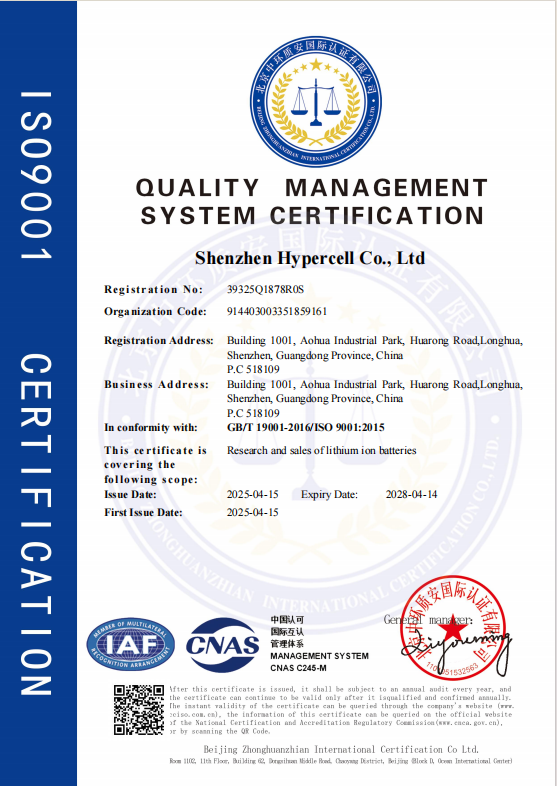
- ISO 9001:2015 for quality management systems.
- ISO 14001:2015 for environmental management systems.
- RoHS certificate for restricted-substance compliance.
- CB test certificate for electrical safety testing.
- Sea and air transport identification and classification reports for shipping compliance.
Hypercell holds all of these documents. For a buyer, verifying these certificates before the price comparison begins prevents a common mistake: shortlisting factories that cannot legally or safely ship the product. Transport classification reports are especially relevant for global procurement because incomplete documentation can cause delays at customs or with freight forwarders.
4. Assess Engineering Capability, Not Just Production Capacity
A factory can have large production lines but a weak engineering team. In that case, the buyer carries the design burden. A strong R&D function protects the buyer in a different way: it catches design flaws before tooling and mass production begin. Hypercell's research covers new materials, new technology, and battery management circuits, as well as forward-looking work on solid-state batteries and sodium-ion batteries. For procurement, these capabilities translate into fewer prototype iterations and a smoother production ramp.
5. Use Production Scale to Spread Fixed Costs
Unit price is highly sensitive to production scale. A factory with a daily output of 30 MWh — supported by three production sites and more than 1,200 employees — can absorb fixed costs across a much larger volume than a small workshop. Buyers who combine orders, standardize battery packs across product families, or commit to volume forecasts can capture lower per-unit pricing without asking the supplier to operate at a loss. Negotiation then becomes a legitimate discussion about volume and planning, not merely pressure on margin.
6. Check Supply Chain Stability and Vertical Manufacturing
Component shortages are a major source of hidden cost in battery procurement. If a cell, a protection board, or a connector is unavailable, the assembled battery cannot ship. The buyer then faces production downtime, expedited freight, or unhappy end customers. A battery assembling factory with a well-established supply chain and vertical manufacturing capabilities offers protection from supply disruption. Hypercell's supply chain combines local and global suppliers, all vetted through a rigorous selection process, and vertical manufacturing keeps production planning more predictable. For buyers, predictable delivery is a cost lever that is often overlooked.
7. Replace Unit-Price Comparison With Total Cost of Ownership
Total cost of ownership is the final decision layer. It includes the purchase price, plus design validation, certification, transport, customs clearance, incoming inspection, rework, scrap, warranty claims, and the cost of potential field failures. Once these items are added, the lowest-priced supplier often loses its advantage. Conversely, a supplier with documented certifications, stable capacity, and engineering support can justify its unit price because it reduces the cost items that follow the purchase. This is the logic behind quality-first cost control: spend where the risk is highest, and save where the waste is visible.
Step-by-Step: A Quality-First Procurement Workflow
To implement these levers in practice, buyers can follow a seven-step workflow.
Step 1: Define the Application and Operating Environment
Document the voltage range, capacity requirement, load profile, temperature exposure, cycle life target, and physical dimensions of the battery cavity. This becomes the baseline for every later decision.
Step 2: Set Your Quality and Compliance Baseline
List the certifications the battery must meet, including ISO system certifications for the factory and product-level certificates such as RoHS, CB, and transport classification reports. Share these requirements with every candidate factory.
Step 3: Shortlist Factories Based on Evidence
Evaluate each battery assembling factory using structural data: years in operation, production capacity, number of facilities, headcount, R&D depth, supply chain, and certification coverage. Avoid basing the shortlist on website claims alone.
Step 4: Validate the Design Through a Prototype or Sample
A sample batch tests the factory's understanding of the specification. Check dimensions, capacity, protection settings, and safety performance. Use this stage to improve the design before committing to mass production.
Step 5: Analyze Total Cost of Ownership
Build a cost model that includes transport, customs, inspection, quality risk, and warranty. Compare factories on TCO, not on unit price. This analysis often reveals that a stable supplier with verified certifications is the lowest-cost option.
Step 6: Confirm Transport and Logistics Preparation
Ask the factory for air and sea transport identification and classification reports. Confirm packaging, labeling, and documentation. This step reduces the risk of shipping delays and customs rejection.
Step 7: Plan the Ongoing Cost Review
Schedule a quarterly review that looks at incoming quality metrics, on-time delivery, warranty claims, and engineering support. Use the review to adjust forecasts and identify new cost-saving opportunities without changing the quality baseline.
Use Cases: Cost Control Across Application Areas
Industrial Instruments and Analyzers
Instruments such as analyzers, portable meters, and control equipment need dependable batteries over long service cycles. These applications often benefit from Li-ion cylindrical packs such as the INR18650 series, which offer mature cell technology, predictable supply, and established safety testing. Pack nomenclature such as the INR18650-5S1P identifies a five-series, one-parallel configuration, while the INR18650-2S4P identifies a two-series, four-parallel layout. The correct topology depends on the device voltage window and runtime target. A battery assembling factory that supports industrial clients should offer multiple series and parallel configurations to match different targets. The cost-saving principle is to select the simplest reliable configuration, not the largest available pack.
Medical Devices
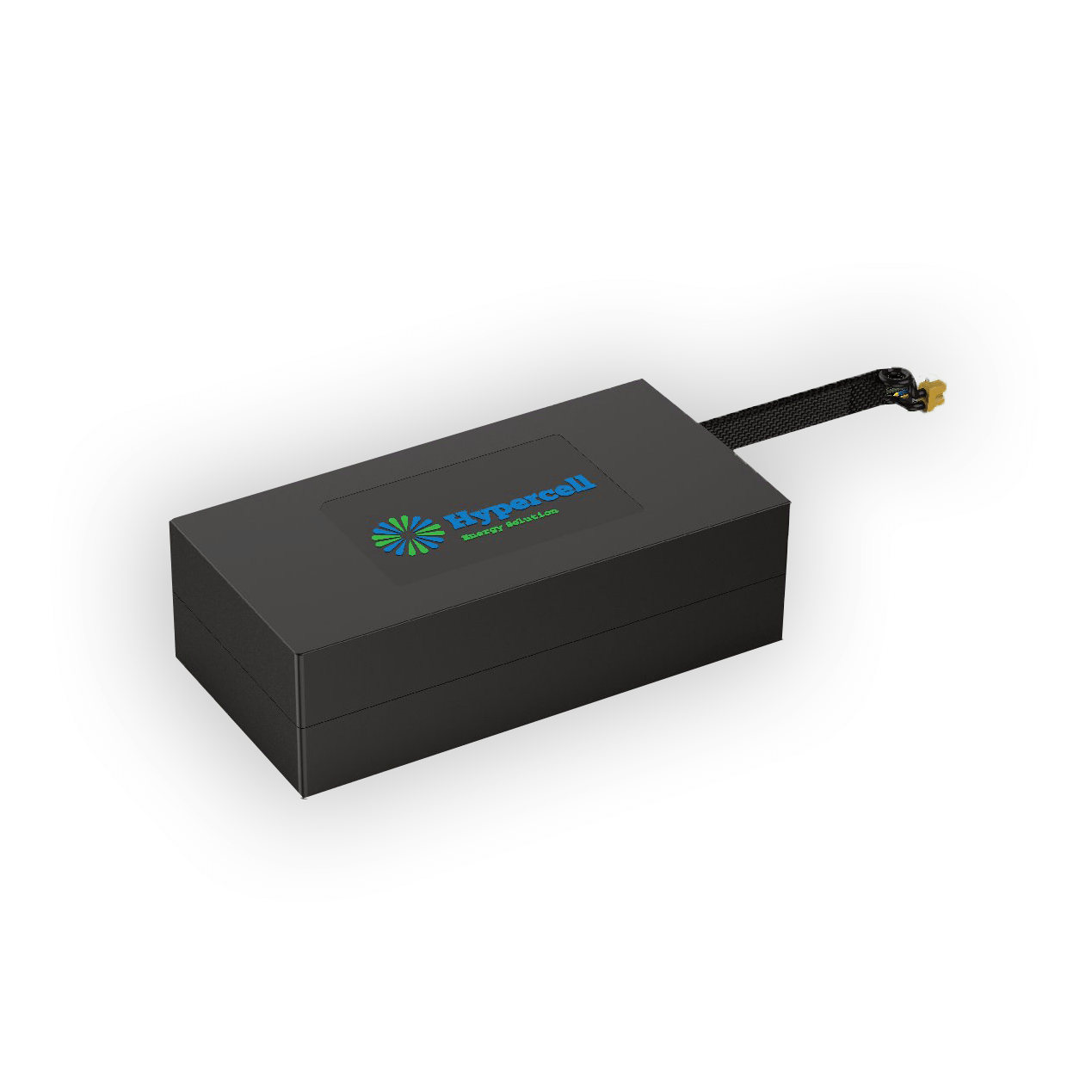
Medical devices require consistent, reproducible quality and long battery life. Buyers in this segment typically prioritize verified quality processes over low price, but they still control cost by reducing product returns and regulatory issues. Custom Li-polymer batteries, such as the HPL series, can be designed in thin or shaped formats that fit compact medical equipment. With ISO 9001:2015 and ISO 14001:2015 quality systems in place, an assembler can offer medical device buyers the documentation trail required for regulatory submissions.
IoT Devices and Consumer Electronics
IoT devices often run on small batteries for years, and consumer electronics demand compact form factors. Li-polymer batteries such as the HPL432733 3.7V 300mAh cell are examples of customized small-format batteries that can match the power profile of the device. For buyers, the cost risk is mismatched capacity: a battery that is too large adds cost, while a battery that is too small causes early replacement. Engineering conversations with the assembler help identify the right balance.
Robotics and E-Mobility
Robotics and electric mobility applications require high-rate discharge, fast charging, and stable thermal performance. Cylindrical packs with higher series counts, such as the INR21700-13S10P, support such power demands. The procurement challenge is balancing power performance with cost. A factory with cell-level validation and strong battery management system engineering can reduce the risk of overheating and premature degradation, protecting the buyer from expensive field failures.
Cost Control Approach Comparison
The table below summarizes the difference between short-term price-focused procurement and the quality-first cost control approach recommended in this guide.
| Cost lever | Price-focused shortcut | Quality-first approach | Procurement impact |
|---|---|---|---|
| Cell selection | Accept unverifiable cell sources | Verify cell specification and source | Fewer early failures and warranty claims |
| Certification | Skip compliance checks | Check ISO 9001, ISO 14001, RoHS, CB, transport reports | Lower customs and shipping risk |
| Quality system | Trust a single sample | Audit process and quality management system | More consistent production batches |
| Specification | Use a generic catalog cell | Customize size and parameters | Reduces system-level redesign cost |
| Production scale | Order in small scattered batches | Consolidate volume with an established factory | Lower per-unit cost through scale |
| Cost decision | Compare purchase price only | Evaluate total cost of ownership | Avoids hidden rework and failure costs |
FAQ: Battery Assembling Factory Cost Control, Quality, and Procurement
What is the most effective way to control procurement costs at a battery assembling factory without sacrificing quality?
The most effective approach combines specification alignment, certification verification, scale utilization, and total cost of ownership analysis. Define the real performance requirement for the device, verify that the factory holds ISO 9001:2015 and ISO 14001:2015 certificates plus product-level certifications such as RoHS, CB, and transport classification reports, and then compare quotes on lifecycle cost. Buying from a certified and experienced assembler reduces the risk of defects, returns, and shipment delays that usually cost more than the initial price difference.
Can a battery assembling factory handle customized or small-batch Li-ion battery requirements?
Yes, but the economic outcome depends on the assembler's engineering capability. Factories with in-house R&D and a packing technology department can customize cylindrical, polymer, and LiFePO₄ batteries in different shapes, capacities, and discharge characteristics. Hypercell, for example, supports special environments and specifications, including wide-temperature ranges, high specific capacity, high-rate discharge, and fast charging. Buyers should validate the factory's ability to build prototypes before mass production to reduce design iteration costs.
Why do custom Li-ion battery quotes vary so significantly between battery assembling factories?
Quote differences usually reflect differences in cell quality, protection circuit design, testing depth, certification coverage, and quality control investment. Two factories can produce the same nominal voltage and capacity with very different internal components. The lower quote often excludes or reduces testing, documentation, or traceability. Buyers should ask for a detailed cost breakdown — cell brand, BMS function, test procedure, and certification coverage — before comparing price.
What should a buyer expect during the sample stage before mass production?
The sample stage validates form factor, capacity, protection settings, safety performance, and environmental tolerance. A reputable battery assembling factory will use the sample process to confirm that the design can be manufactured consistently. This stage is also the buyer's best opportunity to adjust the specification before tooling and bulk material purchase. The engineering team should provide clear feedback on manufacturability and cost trade-offs during sample review.
What is a realistic lead time for a custom Li-ion battery order from a battery assembling factory?
Lead time depends on cell availability, BMS lead time, assembly complexity, order volume, and factory utilization. A factory with three production sites, more than 1,200 staff, and 30 MWh daily output, such as Hypercell, can offer more predictable lead times because its scale covers material preparation and production planning more effectively than a small workshop. For an accurate timeline, buyers should share their target volume and specification early. Contact Hypercell at info@hypercellbattery.com or call +86 755 2376 4134 for a cost estimate and lead-time assessment based on your project.
Conclusion: Cost Control and Quality Are Not Opposites
The choice between cost and quality at a battery assembling factory is not a binary one. Cost overruns usually come from vague specifications, unverified suppliers, weak engineering support, and short-term price comparisons. Quality, on the other hand, is a cost-control mechanism: certified processes, stable production, and strong supply chains reduce defects, delays, and warranty obligations.
Hypercell has applied this quality-first logic since 2007. With three factories in Guangdong, a 30 MWh daily output, a large R&D team, and ISO 9001:2015 and ISO 14001:2015 management systems, the company positions itself as a partner for buyers who want to control cost without compromising quality. To start the process, send your project specification to info@hypercellbattery.com or visit www.hypercellbattery.com to discuss samples, quotes, and lead times.
Have Questions or Need More Details?
Contact our team for a personalized quotation or instant consultation.
Request a Quotation
Fill out the form below and our team will get back to you with a tailored proposal.
WhatsApp Direct Chat
Prefer to chat in real-time? Message us on WhatsApp for instant assistance & quick answers.
- Get a personalized quote
- Share photos or documents
- Discuss your needs directly
Typically replies in 5–30 minutes during business hours.