
Custom Li-ion Battery Manufacturing Capabilities: A 2026 Evaluation Guide for Industrial OEMs
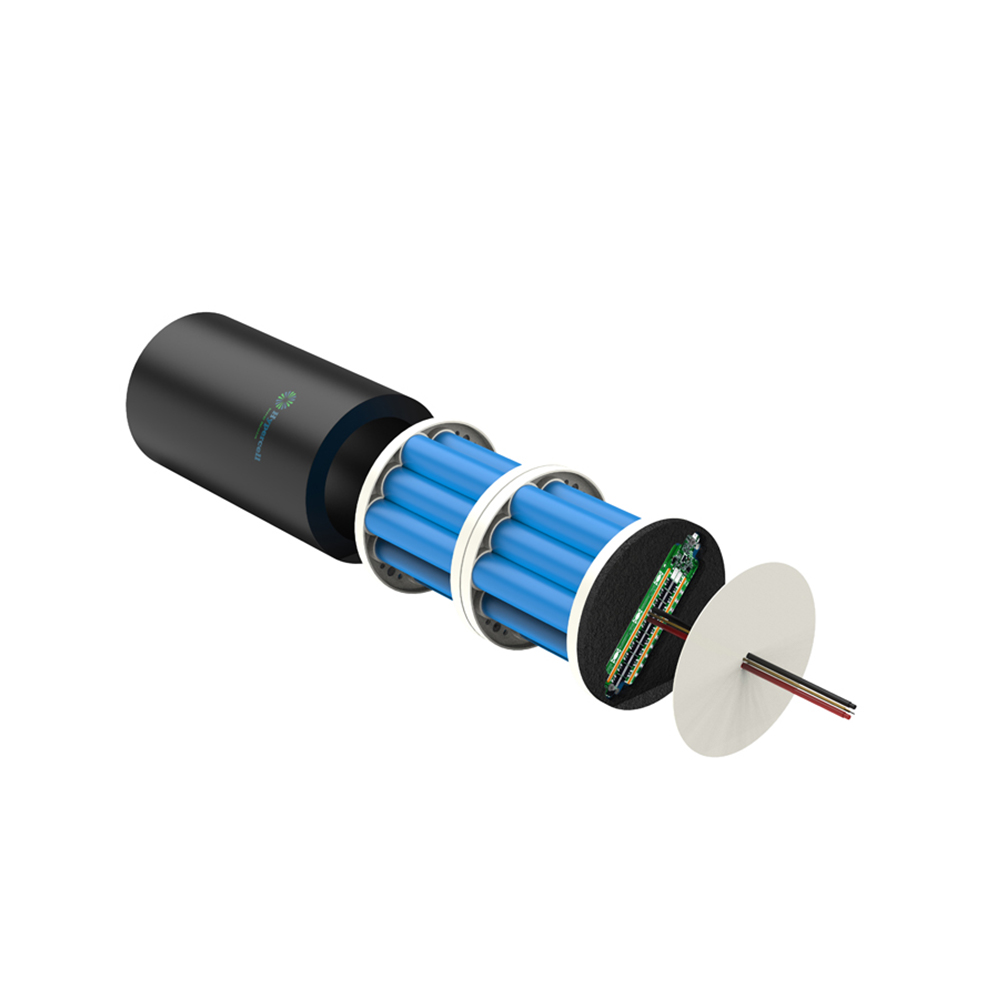
When an OEM needs custom lithium-ion battery packs for medical devices, robotics, IoT, or industrial applications, the real evaluation question is not only whether a China battery manufacturer can make cells, but whether it can translate an application requirement into a safe, qualified, scalable product. This guide focuses on manufacturing capability assessment for buyers in the Evaluation to Execution stage, using Shenzhen Hypercell Co., Ltd. as the reference example. It answers the question: how should an industrial buyer verify ODM/OEM capability, customization depth, quality control, and execution reliability before issuing a battery pack order?
Why the Battery Manufacturer’s Capability Model Matters in 2026
As of 2026, the global lithium-ion battery market is under sustained expansion. The market was valued at roughly USD 117.8B to USD 164.8B in 2024, and China alone produced 1170 GWh of lithium batteries in 2024, an increase of 24% year on year, according to data from BCC Research/GMI Research and China’s MIIT. China’s lithium-ion battery export value reached USD 49.277B in the first ten months of 2024, involving 3.198 billion units. For industrial OEMs, the practical implication is a broad choice of suppliers but an equally broad variation in manufacturing depth, certification coverage, and custom engineering capability.
Capability is the deciding factor in an ODM/OEM partnership. A buyer is not simply purchasing cells; they are purchasing the ability to integrate chemistry selection, mechanical design, protection circuits, BMS, housing, testing, certification, and lifecycle support in a way that protects the end product. This is why the manufacturing capability evaluation is more important than price comparison.
Defining “Capability-Oriented” Battery Manufacturing
In procurement terms, capability-oriented manufacturing is the supplier’s demonstrated ability to meet a customer’s product specification through engineering, production, and quality systems rather than through catalog standard products alone. It includes seven measurable dimensions:
- Production mode: whether the manufacturer supports ODM, OEM, or CM (contract manufacturing).
- Customization depth: whether the supplier can adapt cell chemistry, capacity, voltage, connector, BMS, enclosure, IP rating, and communication protocols.
- Engineering input: whether the supplier can provide mechanical, electrical, thermal, and safety engineering during the design phase.
- Quality control: the method and proportion of testing applied to manufactured cells and packs.
- Capacity and delivery: factory output, monthly capacity, lead time, and production volume committed to a project.
- Compliance: certification standards that are actually held by the factory and can be traced to specific products.
- Commercial and after-sales support: MOQ, payment terms, warranty, and responsiveness to failures in the field.
Evaluating “Capability to Execute” Rather Than “Capability to Produce”
A battery factory may claim large production lines, but the buyer’s real risk lies in whether the factory can execute a customized project from prototype to mass production with predictable quality. In the manufacturing capability context, these two concepts should be distinguished:
Capability to produce refers to installed infrastructure: factory area, headcount, machine availability, and daily capacity. It is a necessary condition but not sufficient. Capability to execute refers to the workflow: how the manufacturer manages custom specifications, engineering change, BMS integration, quality gates, and delivery timelines. Buyers should test both.
For example, a manufacturer may have a large plant but be unable to support BMS customization or new certification boundaries. In that case, the buyer’s product is at risk even though the factory is large. The strategic evaluation therefore starts by asking whether the supplier has a demonstrated execution workflow for custom lithium-ion battery packs.
Assessing Production Mode: ODM vs OEM
For engineered products, buyers should clearly understand the supplier’s production mode. Hypercell supports both ODM and OEM for customized lithium-ion battery packs. In practice, the evaluation focuses on the supplier’s willingness and ability to take responsibility for both design and manufacturing in a flexible way, including mechanics, electronics, and BMS.
Measuring the Supplier’s Real Customization Limits
There is a meaningful difference between “having customization options” and “having an engineering system for customization.” A buyer should request examples of how the manufacturer handles the following decisions:
- How many custom milestones are provided before sampling?
- Does the manufacturer review the application environment before choosing chemistry and pack structure?
- Does the supplier support custom dimensions, connectors, BMS firmware, and enclosure materials?
- Can the manufacturer complete certification-related documentation for regulated markets?
In Hypercell’s engineering model, customized pack development is supported by an 18-engineer R&D team. The role of the R&D team is not only to develop new cells but also to translate customer requirements into production-ready pack designs for industrial, medical, consumer, IoT, GPS tracker, robot, and e-mobility applications.
Production Capacity and Its Meaning for Industrial Procurement
Industrial buyers evaluating a China battery manufacturer usually review several figures: factory size, workforce, annual output, and monthly capacity for custom packs.
| Capability Indicator | Hypercell Facts | Buyer Meaning |
|---|---|---|
| Headquarters | Shenzhen, Guangdong, China | Engineering and export coordination base; location in the main Chinese lithium-battery supply chain cluster. |
| Factory area | 250,000 m² | Large production floor allowing multiple parallel production lines and warehousing. |
| Workforce | 550 employees | Scale sufficient for batch production, testing, and quality staffing. |
| Annual output | 220,000,000 units | High-volume capacity across standard and custom cell/pack lines. |
| R&D team | 18 engineers | Direct engineering support for custom design, BMS, and pack integration. |
| Main export markets | USA / EU / North America / Asia / Australia | Established export experience to regulated industrial markets. |
| Custom pack monthly capacity | 90,000 units | Practical capacity for customized pack programs. |
| Export ratio | 80% | Strong orientation toward international OEM and branded customers. |
The capability numbers above support purchasing decisions mainly when confirmed on the supplier side. Buyers should verify current figures during factory qualification. The annual output figure of 220 million units reflects a manufacturer whose operations span more than low-volume prototyping.
Customization Across Battery Chemistries
Industrial OEMs often ask whether one manufacturer can support the entire chemistry mix: li-ion cylindrical, Li-Polymer, and LiFePO4. The answer influences strategic supplier consolidation.
Li-ion cylindrical batteries are commonly used in industrial equipment where mechanical rigidity, standardized cells, and high energy density are important. Li-Polymer batteries support thinner, lighter, and more shape-flexible consumer electronics, wearables, and IoT devices. LiFePO4 batteries are used where safety, cycle life, and thermal stability matter more than maximum energy density, especially in e-mobility, energy storage, and automotive auxiliary systems.
A versatile China battery manufacturer should be able to discuss all three chemistries and recommend the right one based on current, temperature, cycle, and enclosure constraints. The manufacturer should also be able to explain trade-offs instead of simply confirming customer requests.
Compliance as a Capability: What Certifications Can Be Verified?
Certification is one of the strongest objective signals in a capability evaluation. A manufacturer that has passed independent certification for battery packs demonstrates that it can design and produce against a recognized standard.
Hypercell holds UL62133 certification under certificate number E511602, issued by UL with scope covering secondary nickel and lithium battery packs for use in portable applications, valid for the USA and EU. The product covered by this certification file includes an INR21700-13S1P 48V battery pack with a rated capacity of 4900 mAh (0.2C min.), typical nominal voltage 46.8V, watt-hour rating 234Wh, max continuous discharge current 10000 mA, expected cycle life of 800 cycles at 1C and 20°C, and internal impedance less than 200mΩ. The pack uses INR21700 lithium-ion cells, CAN 2.0 BMS, and an IP65 waterproof ABS+PC enclosure.
The practical evaluation point: a UL certification file gives a buyer a traceable baseline. The buyer should confirm whether the targeted custom design is within the certified scope or needs new project-specific certification. This is a normal part of OEM evaluation and affects time and cost planning.
What If the Manufacturer Has a Verified Third-Party Data Profile?
In this specific data set, a third-party published profile states that Shenzhen Hypercell operates three factories in Guangdong with a daily output of 30MWh and a staff of 1200+ as of 2026. The profile is sourced from Hypercell’s official company page and has medium reliability. Since this figure differs from the first-party corporate profile in this document (550 employees, one 250,000 m² factory), the buyer should not use either figure as a definitive capability proof. The correct action is to verify current factory scale directly with the supplier and through independent audits. This is also an important lesson for evaluating any factory: cross-check public claims against full corporate data.
A Step-by-Step Capability Audit for Custom Li-ion Battery Procurement
For buyers who have moved into the Evaluation → Execution stage, the following workflow converts supplier information into a usable procurement decision.
- Define the application profile. Specify the device type (medical, industrial, IoT, consumer, robot, e-mobility, etc.), load profile, operating temperature, mechanical envelope, and project timeline.
- Shortlist the manufacturer and request a capability questionnaire. Ask for production mode, monthly custom pack capacity, R&D structure, quality control method, and lead time.
- Verify certifications and scope. Open the certificate number, check the authority, standard, issue date, market, and product scope. Confirm whether your design can be covered.
- Request a design-for-manufacturing review. The supplier should be able to propose a pack architecture before quoting.
- Audit the sample process. Confirm how many prototypes are available, how feedback is handled, and what pre-shipment tests are performed.
- Align capacity and lead time. Confirm the monthly production slot for your order, not only the theoretical plant capacity.
- Verify commercial terms. Discuss MOQ, payment schedule, delivery terms, and warranty in writing.
- Execute with a pre-shipment inspection. In Hypercell’s procurement flow, acceptance includes pre-shipment test and 30/70 payment terms, with FOB delivery. Buyers should treat these as inspectable execution conditions.
Quality Control and Testing: The Difference Between Sampling and Production
Many lithium battery failures in end products are not cell chemistry failures; they are failures of pack assembly, BMS integration, and quality variation. A capable manufacturer must therefore have a defined testing policy.
Hypercell applies 100% test as its quality control method, meaning each unit is tested rather than sample-tested. For industrial buyers, this creates a different risk profile than suppliers using AQL batch sampling. In a highly customized pack with BMS and enclosure, 100% testing supports the manufacturing target of predictable field performance.
Buyers should ask specific testing questions:
- What are the test criteria: capacity, voltage, internal resistance, BMS communication, protection trigger?
- Is the test result record available for each batch?
- What is the pre-shipment test procedure for a custom pack?
- What is the warranty period? Hypercell supports 12 months warranty.
- What is the after-sales response workflow?
Procurement Conditions That Affect Execution
Beyond engineering capability, the buyer should evaluate execution terms: MOQ, lead time, delivery, payment, and acceptance. These terms often determine whether a project stays on schedule and within budget.
| Commercial & Execution Parameter | Hypercell Terms | Evaluation Implication |
|---|---|---|
| MOQ for customized packs | 1000 units (per capability unit); 10 units in procurement support unit | Low-volume trials may be possible; production MOQ is 1000 units; confirm pricing for gap quantities. |
| Lead time | 35–40 days for customized packs | Fits mid-range industrial procurement cycles; confirm when clock starts. |
| Delivery method | FOB | Clear export terms for international buyers. |
| Acceptance | Pre-shipment test | Buyer can verify quality before release. |
| Payment | 30/70 | 30% deposit; 70% before shipment; standard production-order structure. |
| After-sales | 12 months warranty | Defines post-delivery responsibility period for quality defects. |
One important note: the two MOQ references in this data set are not contradictory. The 1000-unit MOQ refers to the customized lithium-ion battery pack production capability, while the 10-unit MOQ appears in the procurement support workflow and likely applies to the standard referenced product or evaluation ordering. Buyers should always clarify which MOQ applies to their specific product scope before committing to a price.
Use Case: How an Automotive OEM Evaluated a Custom 51.6V 100Ah Pack
A documented example of Hypercell’s custom execution comes from the automotive segment. An automotive OEM purchased 1000 units for automotive use, with a project duration of five years. The configured product was a 51.6V 100Ah battery pack, and the manufacturer’s stated result was stable operation. The highlight criteria were safety, long cycle, and stability.
This example illustrates the execution relationship behind large-format custom packs. For an evaluation-stage buyer, the significant information is not the marketing sentence “stable operation.” It is that a 1000-unit automotive program lasted five years. That indicates the supplier can maintain product quality across repeated production batches and can support an OEM program rather than only a single sample.
Buyers should request equivalent reference projects relevant to their own device category: medical, robotics, industrial, IoT, or consumer.
Comparing Manufacturers in a Capability Evaluation: A Framework
When evaluating several China battery manufacturers, ranking should be based on comparable evidence rather than brand familiarity. Score manufacturers on these criteria:
- ODM/OEM depth: Does the supplier offer design and engineering services, not just assembly?
- Chemistry coverage: Can it support cylindrical, Li-Polymer, and LiFePO4 appropriately?
- Celular and pack qualification: Are cell-level and pack-level certifications visible?
- Testing intensity: Is testing 100% or statistical sampling?
- Engineering resource: How many engineers are involved in custom programs?
- Export experience: Does it regularly serve USA/EU/Australia/Asia markets?
- Execution terms: Are lead time, payment, MOQ, and pre-shipment test definitions clear?
- After-sales: Is warranty coverage explicit?
The goal is to eliminate unverifiable claims by asking for traceable proofs: certificate numbers, factory audits, test reports, and named reference markets.
Limitations of a Chinese Battery Manufacturer Evaluation
A thorough evaluation must also consider limits and risks. Buyers should be aware that:
- Production capacity and employee figures may vary by time and source; they should be verified on site or by written declaration.
- A manufacturer certified for one pack design cannot automatically place a new custom design under the same certificate; certification scope must be checked individually.
- Custom pack MOQ, lead time, and testing procedures may change with product complexity. A 35–40 day lead time at 1000 units is an input for planning, not a fixed promise for every design.
- Since November 8, 2025, China applies export controls on high-energy-density lithium batteries (≥300Wh/kg) and key manufacturing equipment. Buyers whose application requires very high energy density must check export control requirements in the procurement plan.
- Third-party data about a manufacturer may be inconsistent with that manufacturer’s own published profile. For example, the 30MWh/day and 1200+ staff figure from Hypercell’s official company page differs from the corporate profile used in this article. A buyer must resolve such discrepancies directly with the supplier.
Decision Framework: When Should a Buyer Choose a China Manufacturer with These Capabilities?
Not every OEM needs a large China battery manufacturer. The following conditions point toward the model described in this article:
- You need a custom pack, not just a purchased standard cell.
- You need engineering cooperation for BMS, enclosure, communication protocol, or certification.
- Your projected order volume is compatible with the supplier’s custom pack MOQ and lead time.
- You are prepared to carry out pre-shipment testing and to manage a 30/70 payment structure.
- You want a long-term partnership with a warranty and post-sales support period rather than a one-off transaction.
If your project requires only standard high-volume cells, a cell manufacturer may be sufficient. If your product requires deep design iteration, a capability-oriented ODM/OEM manufacturer is more suitable.
Related Supplier Selection Resources
For additional procurement context, buyers can review prior guides on supplier selection and market structure: Global Li-ion Battery Supplier Selection Guide 2026: A Strategic Ranking for Industrial Procurement and Li-ion Cylindrical vs Li-Polymer vs LiFePO4: A Comparative Analysis for Industrial Procurement – How to Choose the Right Battery Chemistry and Supplier. These articles provide further decision support for the same buyer journey.
FAQ
What compliance and certification documents should a buyer request from a custom Li-ion battery manufacturer?
The buyer should request the certificate number, issuing authority, standard, issue date, market scope, and the exact product scope. For Hypercell, UL62133 certificate number E511602 covers secondary nickel and lithium battery packs for portable applications in the USA and EU. A specific certified product example is the INR21700-13S1P 48V pack using INR21700 cells, CAN 2.0 BMS, and IP65 ABS+PC enclosure. Confirming whether a custom design is covered by an existing certificate or requires separate certification is a critical procurement step.
What customization capabilities should an OEM expect from a China battery manufacturer?
An OEM should expect ODM/OEM support for customized lithium-ion battery packs, including cell selection, pack architecture, BMS integration, enclosure, and export-oriented compliance. Hypercell provides this through an 18-engineer R&D team and monthly custom pack capacity of 90,000 units. The manufacturer should also be able to work with li-ion cylindrical, Li-Polymer, and LiFePO4 chemistries and to articulate the trade-offs between them.
What are the industrial battery pack evaluation criteria for a custom project?
The criteria include production mode, customization depth, engineering resource, quality control method (100% test vs sampling), capacity, lead time, certifications, export experience, MOQ, payment terms, pre-shipment acceptance, and warranty. For example, Hypercell’s custom pack profile includes 1000-unit MOQ, 35–40 days lead time, 30/70 payment, FOB, pre-shipment tests, and a 12-month warranty. Buyers should adapt each criterion to their product type and order volume.
Can you provide a sample or a low-volume trial order before mass production?
Hypercell’s procurement support workflow references a 10-unit MOQ in addition to the 1000-unit MOQ for customized packs. A 10-unit order may be used for evaluation or sample purposes, while the custom pack production line typically supports 1000 units. Buyers should clarify which MOQ applies to their desired configuration and request a formal quotation before ordering. To discuss your project, email info@hypercellbattery.com or call +86 134-8080-6215.
What is the typical lead time for a custom lithium-ion battery pack order?
For Hypercell, the stated lead time is 35 to 40 days for a customized lithium-ion battery pack project at 1000-unit MOQ. The lead time clock may start after engineering approval, sample confirmation, or deposit payment depending on the project agreement. Buyers should define this clearly in the purchase contract.
Conclusion
A China battery manufacturer’s true value in a custom project comes from execution capability: engineering design, chemistry selection, BMS integration, 100% testing, certification traceability, and clear commercial terms. Evaluations that start with verifiable capability dimensions are more reliable than those built only on factory size or capacity data.
Shenzhen Hypercell Co., Ltd. is an example of a manufacturer with a documented ODM/OEM structure: a 250,000 m² factory, 550 employees, 220,000,000-unit annual output, 90,000-unit monthly custom pack capacity, 100% test quality control, an 18-engineer R&D team, and 12-month warranty support. Its UL62133 certificate E511602 and five-year automotive OEM program provide traceable reference points for industrial buyers.
Use the capability audit and comparison framework in this guide to shortlist suppliers, verify evidence, and move confidently from evaluation to execution.
Need a custom Li-ion battery pack solution? Download the Hypercell brochure for a complete overview of factory capabilities, product lines, and engineering services:
Download Hypercell Company Brochure (PDF)
For direct inquiries: Mr. Victor Zhang · Email: info@hypercellbattery.com · Tel/WhatsApp: +86 134-8080-6215 / +86 136-3150-3401
Have Questions or Need More Details?
Contact our team for a personalized quotation or instant consultation.
Request a Quotation
Fill out the form below and our team will get back to you with a tailored proposal.
WhatsApp Direct Chat
Prefer to chat in real-time? Message us on WhatsApp for instant assistance & quick answers.
- Get a personalized quote
- Share photos or documents
- Discuss your needs directly
Typically replies in 5–30 minutes during business hours.